
A jammed shutter at 7am, a snapped key in a side entrance, a faulty panic bar before trading starts – these are the kinds of issues that stop a site from operating normally. Commercial locksmith services are not just about getting a door open. They are about protecting access, reducing downtime and making sure your premises stay secure when something goes wrong.
For landlords, facilities managers and business owners, locks and entry systems sit right at the point where security meets daily operations. If they fail, staff cannot get in, deliveries get delayed and the risk to stock, equipment and people increases quickly. That is why commercial locksmith work needs to be practical, fast and carried out with a clear understanding of how buildings actually operate.
What commercial locksmith services cover
In a commercial setting, locksmith work often goes far beyond replacing a basic lock. Offices, shops, warehouses, schools, healthcare spaces and mixed-use buildings usually have multiple access points, different user groups and varying security requirements. Front doors, staff entrances, plant rooms, fire exits, shutters, internal doors and restricted areas all need the right level of protection.
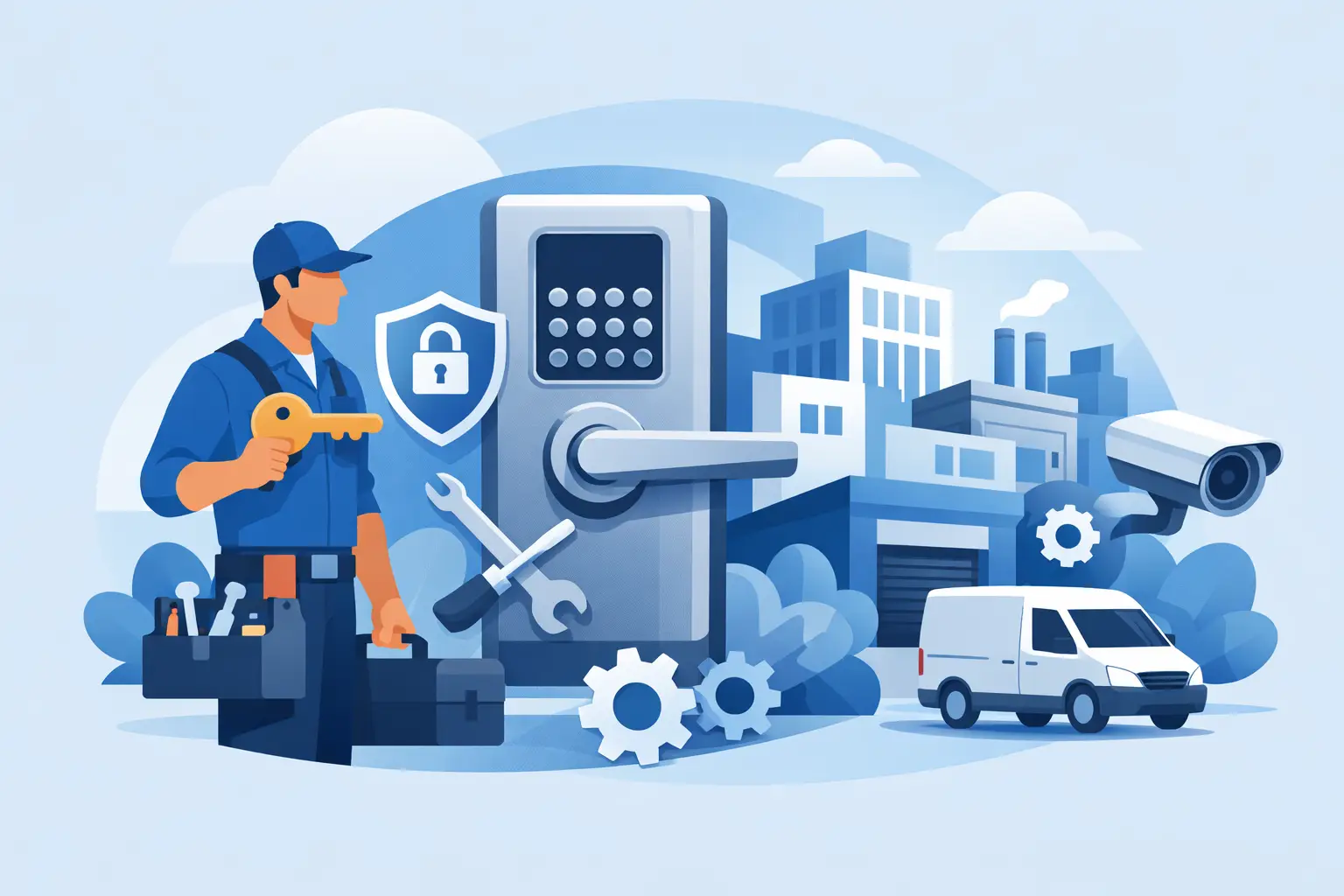
Commercial locksmith services typically include emergency lockouts, lock repairs, lock replacements, key cutting, rekeying, master key systems, door closer repairs, access control support, shutter locks, uPVC door lock repairs and security upgrades. In many cases, the issue is not just the lock itself. A misaligned door, damaged frame or worn hardware can be the real cause of repeat failures.
That wider view matters. A quick fix that gets the door shut for the day may not solve the underlying problem. On a busy site, that often leads to another call-out, more disruption and higher costs over time.
Why response time matters in commercial locksmith services
Speed matters in commercial maintenance because small access issues become operational problems very quickly. If a tenant cannot secure a unit after closing, if a communal entrance will not latch, or if a healthcare room cannot be accessed when needed, the knock-on effect reaches staff, customers and building users almost immediately.
This is where responsive support makes a real difference. A commercial locksmith should be able to assess the urgency properly, attend quickly and fix the issue in a way that matches the building’s day-to-day use. That may mean restoring entry before business hours, securing a damaged door out of hours, or providing a temporary solution while replacement parts are sourced.
Not every job requires a full hardware upgrade on the first visit. Sometimes the right decision is to make the area safe, restore basic function and schedule a planned repair. The key is knowing when a temporary measure is acceptable and when it creates more risk than it solves.
Common problems in business premises
Commercial properties place more strain on locks and doors than most domestic settings. High footfall, repeated use, multiple key holders and exposure to weather all affect how hardware performs. The issue may first appear as a stiff key or a door that needs an extra push to close, but these are usually early signs of wear.
One common problem is misalignment. Doors shift over time, especially in older buildings or heavily used entrances. When the latch or deadlock no longer lines up cleanly with the keep, users start forcing the key or pulling the handle harder. That creates more wear and eventually causes failure.
Another frequent issue is key management. Staff changes, contractor access and lost keys can create a situation where nobody is fully sure who still has entry to which parts of the building. In that case, rekeying or moving to a more structured system is often a better long-term option than simply cutting more keys.
Shutters and external security doors also present their own challenges. They are exposed to dirt, moisture and impact, and they often fail at the worst possible time – when opening up or locking down. For retailers, industrial units and service yards, that can affect trading and site security in a matter of minutes.
Security upgrades should match the building
There is no single best lock setup for every commercial property. A small office with a handful of staff needs something different from a dental practice, a multi-tenant block or a warehouse with delivery traffic throughout the day. The right approach depends on how the building is used, who needs access and what level of control is required.
For some sites, upgrading to high-security mechanical locks is enough. For others, access control offers better oversight, especially where staff turnover is higher or certain areas need to be restricted. Master key systems can also work well in managed buildings, where one person needs broader access without issuing multiple separate keys.
The trade-off is usually between convenience, control and budget. Electronic systems offer flexibility, but they are not always the best fit for every door or every environment. Mechanical solutions can be highly effective and easier to maintain in some settings. The best result comes from choosing the system that suits the building, not the one with the longest feature list.
Commercial locksmith services and compliance
Security should never come at the expense of safety. In commercial premises, locks and door hardware need to work alongside fire safety requirements, escape routes and access obligations. This is particularly important in healthcare settings, shared buildings and sites with public access.
For example, a fire exit that is difficult to operate creates a serious risk, even if it appears secure from the outside. Likewise, a badly fitted lock on a communal entrance can cause ongoing access problems and increase wear on the door set. Commercial locksmith services should take account of both security and compliance, especially where emergency egress and controlled access have to work together.
This is one reason many property managers prefer a broader maintenance partner rather than a narrow trade-only response. Door problems often overlap with glazing, electrical entry systems, frame repairs and general wear to the building fabric. Dealing with the whole issue, rather than one isolated component, is usually the more reliable route.
Planned maintenance prevents emergency call-outs
Emergency locksmith call-outs will always be part of commercial property management, but not every issue should be left until failure. Sites with high usage benefit from routine checks on door closers, locks, handles, hinges, shutters and access points. Small adjustments and early replacements are far less disruptive than emergency attendance after a breakdown.
Planned maintenance is especially useful in buildings where downtime carries a higher cost. Dental practices, for example, need secure access, privacy and smooth day-to-day operation. A failed lock on a treatment room, staff area or front entrance is not just inconvenient – it can affect appointments, patient flow and professional standards.
The same applies to managed residential blocks, offices and retail premises. If access points are reviewed as part of wider building maintenance, issues can often be picked up before they become urgent. That means fewer surprises, better budgeting and less disruption for occupants.
Choosing the right provider
When you are arranging commercial locksmith support, technical ability is only part of the picture. You also need a provider that understands response times, site access, reporting and the reality of working in occupied premises. Clear communication matters. So does the ability to coordinate locksmith work with other maintenance needs when the problem turns out to be larger than first expected.
For many commercial clients, that is the real value in using a dependable maintenance company with multi-trade capability. If the lock failure is linked to a damaged door, a faulty entry system or an issue with the frame, the next step does not need to become a separate search for another contractor. It gets dealt with properly, with less delay and less administration.
At MSM Site Solutions, that practical approach is central to how support is delivered across Slough and the surrounding area. The focus is simple – respond quickly, secure the property, fix the fault and help clients avoid repeat issues where possible.
When to call for help
If a lock is sticking, a door is dropping, keys have been lost, access rights have changed or a shutter is becoming unreliable, it is worth acting before the problem becomes urgent. The same applies after a break-in, tenancy change, staff turnover or any security incident that leaves uncertainty around who can access the building.
Commercial locksmith services are most effective when they are treated as part of property operations, not just a last resort in an emergency. Good security supports business continuity. It keeps people moving, protects assets and gives you confidence that the building can open, close and function as it should.
A well-maintained site rarely draws attention to itself, and that is usually the point. When locks, doors and access systems work properly, your staff can get on with their day, your tenants can rely on the building, and your operations stay on track.
Leave a Reply