
A roof can look sound from ground level while allowing water into insulation, ceilings and electrical routes. Choosing suitable roofing materials is therefore not simply a question of appearance. For landlords, property managers and commercial operators, the right covering must suit the building, cope with local weather and allow for practical inspection and repair.
The best option depends on the roof’s pitch, structure, drainage, access, expected lifespan and how the property is used. A material that works well on a period home may be unsuitable for a large commercial flat roof, while a low-cost repair can become expensive if it does not address the underlying condition of the roof deck, flashings or gutters.
Start with the Roof, Not the Finish
Before selecting a covering, establish what the existing roof can support and what problem needs solving. A replacement roof may be needed because of widespread tile failure, an ageing membrane, persistent leaks or structural deterioration. In other cases, targeted repairs, renewed flashings or better drainage may protect the roof for years without the disruption of a full replacement.
Pitch is a major factor. Steep roofs shed water quickly and are commonly finished with slate, concrete tiles, clay tiles or metal sheets. Flat and low-pitched roofs need a continuous waterproof system with carefully formed falls that direct rainwater towards outlets. Using a material outside its recommended pitch range creates a predictable risk of water ingress, particularly during wind-driven rain.
Weight matters too. Natural slate and some concrete tile systems are heavy. If a property is being re-roofed with a different material, the supporting structure should be assessed rather than assuming it will carry the additional load. This is especially relevant for older residential properties and commercial buildings that have been altered over time.
Common Roofing Materials and Where They Work Best
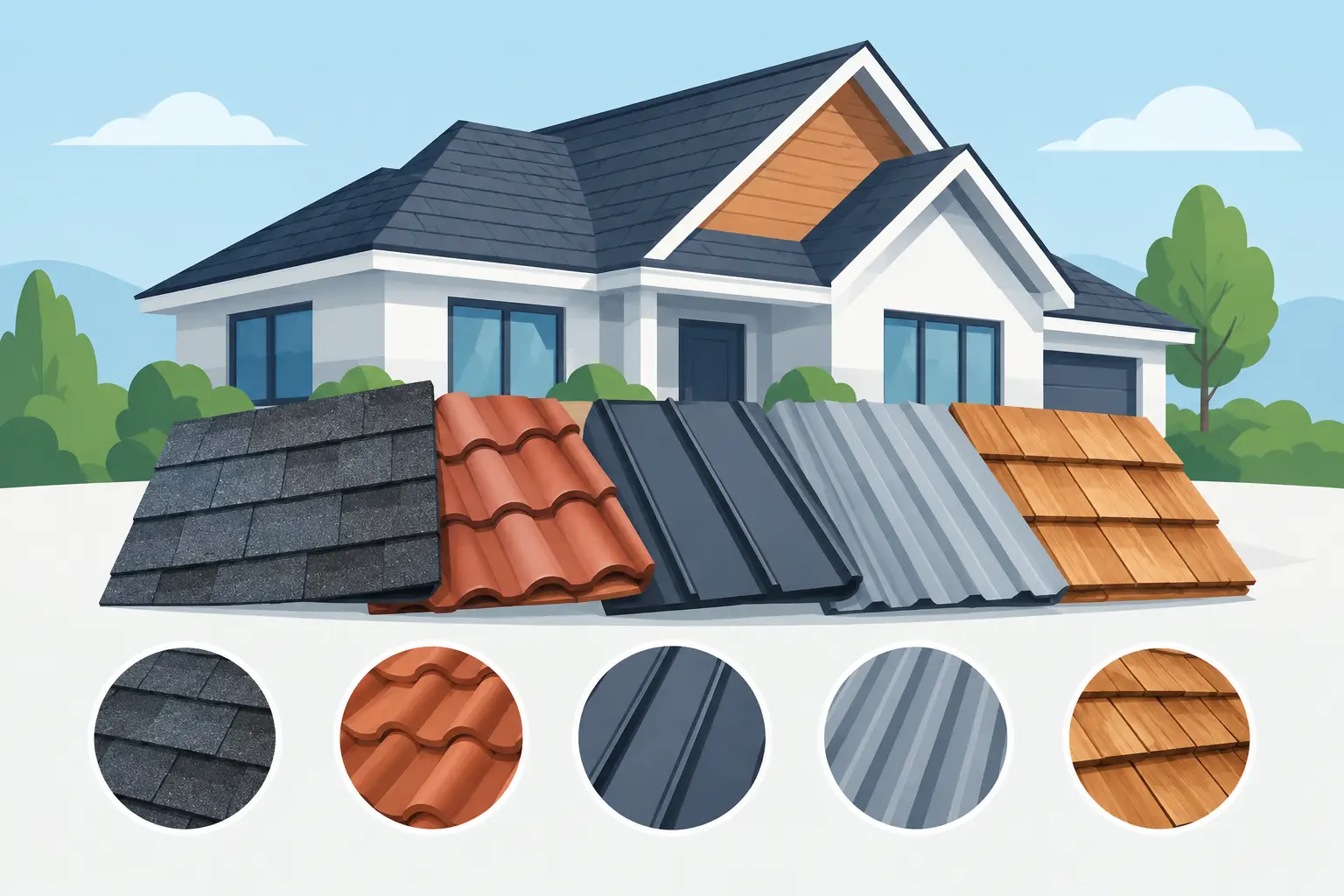
Clay and concrete tiles
Clay and concrete tiles remain a practical choice for pitched roofs across Slough and the surrounding area. Concrete tiles are widely available, durable and generally more cost-effective than natural slate. They offer a broad choice of profiles and colours, making them suitable for many modern homes, extensions and rental properties.
Clay tiles provide a more traditional finish and can retain their appearance well over time. They may cost more initially, but they are often appropriate where the character of the building or planning expectations matter. Both materials require sound battens, correctly installed underlay and secure fixings. A single slipped tile may be straightforward to replace, but repeated failures can point to deteriorated fixings, storm damage or movement in the roof structure.
Natural and fibre cement slate
Natural slate has a long service life when properly installed and maintained. Its low water absorption and distinctive appearance make it a strong option for period buildings and higher-value properties. The trade-off is cost, skilled installation and weight. Individual slate repairs also need care, as forcing a replacement into place can damage surrounding slates.
Fibre cement slate offers a lighter and more economical alternative. It can be useful where budget or structural loading rules out natural slate, although it does not deliver the same visual depth or lifespan. For managed properties, the decision often comes down to the planned holding period, tenant expectations and the importance of matching neighbouring roofs.
Metal roofing
Metal roofing includes standing seam, profiled steel and aluminium systems. It is lightweight, quick to install in the right conditions and well suited to industrial units, commercial buildings, outbuildings and some contemporary residential designs. Coated metal systems can provide a clean, long-lasting finish, but detailing is critical around penetrations, rooflights, edges and junctions.
Noise during heavy rain is sometimes a concern for occupied spaces, although appropriate insulation and roof build-up can reduce this. Metal also expands and contracts with temperature changes, so the fixing method must allow for movement. A poorly detailed metal roof can leak at joints even when the sheets themselves remain in good condition.
Felt, liquid and single-ply flat roof systems
Flat roof coverings should be selected as complete systems rather than as a surface layer alone. Modern reinforced felt systems are familiar, repairable and suitable for many domestic garages, extensions and commercial roof areas. The quality of installation, including laps and edge details, has a direct effect on performance.
Liquid-applied waterproofing is particularly useful where a roof has complex details, awkward penetrations or limited access. It can form a continuous finish around pipes, upstands and rooflights. However, it needs a properly prepared substrate and suitable weather conditions during application.
Single-ply membranes, such as PVC and TPO systems, are common on larger commercial roofs. They are lightweight and can be installed efficiently over substantial areas. They are not automatically the best choice for every property: seams, fixings, drainage design and protection from foot traffic all need to be considered. Where maintenance teams or contractors access plant equipment regularly, designated walkways can prevent premature punctures and wear.
EPDM rubber
EPDM is a durable rubber membrane often used on flat roofs, particularly extensions, garages and smaller commercial areas. It is resistant to weathering and can have relatively few seams on simple roof shapes. Its performance depends on a sound deck, compatible adhesive or fixing method, and neatly finished perimeter details.
EPDM is not a cure for standing water caused by poor falls. Ponding can accelerate wear, encourage debris build-up and make early defects harder to identify. If water remains on a flat roof long after rainfall, the drainage arrangement should be investigated rather than repeatedly patching the surface.
Cost Should Include the Whole Roof Build-Up
Material prices are only one part of the budget. Removal and disposal of the old covering, access equipment, timber repairs, insulation upgrades, drainage works, leadwork, rooflight details and internal protection can all affect the final cost. On an occupied commercial site, phased working and safe access may also be necessary to keep operations running.
The cheapest roofing material is not always the lowest-cost solution over its useful life. A system that needs frequent patching, disrupts tenants or allows moisture into the building can cost far more than a properly specified replacement. Equally, choosing the most expensive material is unnecessary if it does not suit the property’s use or maintenance plan.
For landlords and facilities managers, it helps to compare expected lifespan, repairability, inspection needs and consequences of failure. A dental practice, for example, may need work programmed around patient appointments and equipment protection, so reliability and controlled installation matter as much as the surface finish.
Maintenance Protects Every Roof Type
No roofing material is maintenance-free. Seasonal checks can identify cracked tiles, lifted flashings, blocked gutters, damaged pointing, membrane splits and debris around outlets before they become internal leaks. After high winds, a visual inspection from a safe position is sensible, especially where mature trees, loose roof coverings or ageing guttering are present.
Flat roofs should be checked for standing water, blistering, open seams and blocked drainage points. Pitched roofs need attention to valleys, ridge tiles, chimney flashings and areas where moss or vegetation may retain moisture. Moss does not always cause immediate failure, but heavy growth can obstruct drainage and hide damaged surfaces.
Never rely on an internal ceiling stain as the first sign of a problem. Water can travel along timbers, membranes and services before becoming visible indoors. Prompt investigation limits damage to insulation, plasterboard, finishes and electrical components.
When Repair Is Sensible and When Replacement Is Better
A localised issue – such as a few broken tiles, a failed flashing or a small split in a membrane – can often be repaired effectively. Fast action is particularly valuable after storms, when a small opening can quickly expose the property to further rain damage.
Replacement becomes more sensible when defects are widespread, the existing system is near the end of its service life, or repairs have become repetitive. Signs include recurring leaks in different places, brittle or extensively patched membranes, widespread slipped tiles, rotten roof timbers or inadequate insulation that is best addressed while the roof is open.
MSM Site Solutions can assess roof condition as part of a wider maintenance response, helping property owners and managers decide whether urgent repair, planned works or a full replacement is the most practical route. For commercial properties, coordinated roofing, drainage and internal repair work can reduce disruption and give one clear point of accountability.
The right roof is the one that fits the building, the budget and the way the property is used. Arrange inspections before minor defects become urgent call-outs, and make material decisions based on the whole roof system rather than the visible finish alone.
Leave a Reply