

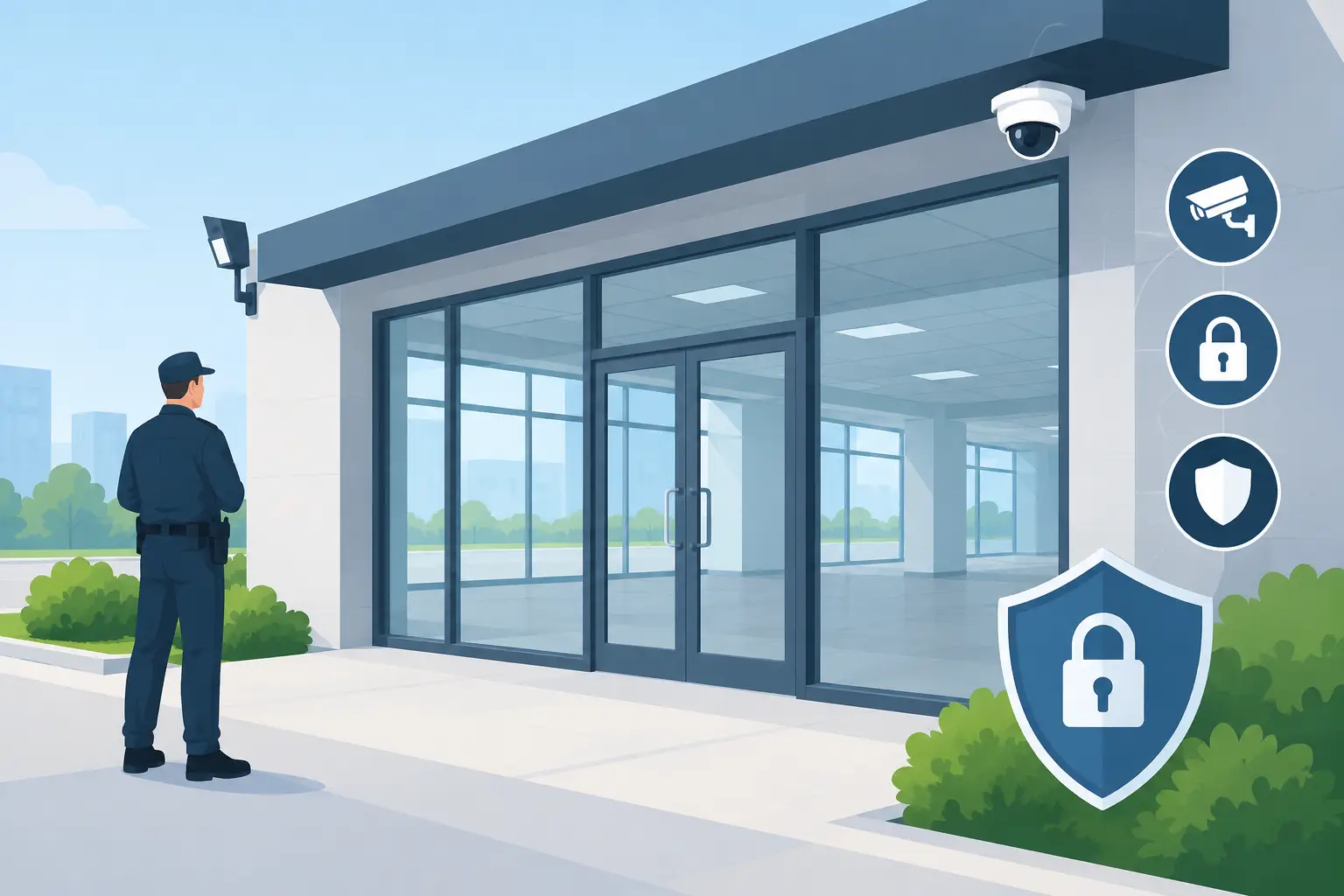
An empty building can attract attention far sooner than most owners expect. A broken pane, overflowing post, unlit entrance or unsecured side gate can signal that nobody is checking the property. The best ways to secure empty premises combine physical protection, regular attendance and fast action when an issue is found.
For landlords, managing agents and commercial operators, the priority is not simply stopping an intruder getting in. Vacant properties can also face water damage, fire risk, vandalism, fly-tipping and insurance complications. A clear security plan protects the building, reduces disruption and helps keep it ready for sale, letting, refurbishment or reoccupation.
Start with a full security and condition check
Before a property is left empty, inspect it as someone looking for an easy way in would. Walk the full perimeter, check all doors, windows, roof access points, service yards, bins, sheds and neighbouring boundaries. Record existing damage with dated photographs, including minor defects that could worsen while the building is vacant.
Pay particular attention to rear and side entrances. These are often less visible from the road and may have older locks, loose hinges or poor lighting. A fire door should still close and latch correctly, but it is not automatically a suitable external security door. Any door that has warped, split or dropped should be repaired before the premises are left unattended.
This first visit should also identify maintenance risks. Loose roof tiles, blocked gutters, damaged fencing and cracked glazing do more than affect appearance. They create weak points, allow water into the building and advertise that the site is not being looked after.
Secure doors, windows and access points
Good physical security begins with the basics. Fit appropriate locks to all external doors, including communal entrances, rear service doors and plant room access. Replace locks where keys cannot be accounted for, particularly after a tenancy ends, staff changes occur or contractors have had access. Keep a written key register and avoid leaving spare keys in meter boxes, planters or unprotected key safes.
Windows need the same attention. Ground-floor, basement and easily reachable windows should close fully and be secured with suitable locks. Damaged glazing should be repaired quickly, as a small crack can become a forced entry point. For higher-risk premises, temporary boarding may be appropriate after a break-in or during building works, but it should be installed properly and reviewed regularly. Poorly fitted boards can damage frames, trap moisture and make a property look abandoned.
Roller shutters, security grilles and gates can provide valuable extra protection for shops, offices, warehouses and yards. They are only effective when they operate reliably, so arrange servicing before they become a problem. A shutter that cannot be raised safely may affect emergency access, while one that cannot close leaves the premises exposed.
Use lighting, alarms and CCTV with a clear purpose
Lighting is a simple deterrent when it is positioned well. Sensor-operated lights at entrances, loading areas and paths can make unwanted activity more visible without leaving every light on all night. Check that fittings are weatherproof, lamps are working and sensors do not repeatedly activate because of trees, passing traffic or animals.
An intruder alarm should match the property and its risk level. A small flat may need a different arrangement from a vacant office, dental practice or construction-support site with valuable equipment. Consider monitored alarms where a response is needed outside normal hours, especially if the property is isolated or has previously been targeted. Test the system, confirm who receives alerts and ensure the emergency contact details are current.
CCTV can support security and provide evidence after an incident, but it is not a replacement for locks, inspections or a response plan. Cameras should cover practical areas such as entrances, gates and vulnerable external spaces rather than being fitted simply because they are available. Commercial operators must also consider their data protection responsibilities, including clear signage and appropriate handling of recorded footage.
Keep the building looking occupied and cared for
Vacant premises are easier to identify when routine signs of activity disappear. Post piling up, uncut grass, overflowing bins and damaged signage can all encourage opportunistic behaviour. Arrange for post to be redirected or collected, waste to be managed and external areas to be maintained.
Timers can help create a normal pattern of internal lighting, but they should be used carefully. A light switching on at precisely the same time every evening can be predictable. Varying timers and using lighting in sensible locations is more convincing than illuminating an empty building from end to end.
For residential properties, check curtains and blinds are left in a reasonable position and that valuables are removed from view. In commercial premises, remove portable electronics, tools, stock and sensitive documents wherever possible. If equipment must remain, keep an up-to-date asset record and store items away from windows and accessible doors.
Arrange regular vacant property inspections
A security system cannot identify every problem. Regular inspections are one of the most effective ways to reduce losses because they catch issues while they are still manageable. The required frequency depends on the insurer, type of property, location, season and condition of the building. Always check the terms of the buildings insurance policy, as vacant-property conditions may require documented visits at set intervals.
An inspection should be more than a quick look through a window. The person attending should check for attempted entry, damaged doors or glazing, water leaks, signs of damp, heating failures, electrical concerns, pest activity, rubbish accumulation and fire hazards. They should also verify that alarms, lights and access controls remain operational.
Keep a simple inspection log with the date, time, findings, photographs and actions taken. This creates accountability and may be useful if an insurance claim is ever needed. It also helps property managers spot repeated problems, such as a gate being forced open or a roof leak returning after heavy rain.
Control utilities and reduce internal risks
Many costly vacant-property claims begin inside the building rather than at the boundary. A burst pipe can cause serious damage before anyone notices, particularly in winter. If the property will be empty for an extended period, consider isolating the water supply and draining systems where appropriate. This should be carried out by a competent professional, as some buildings require water supplies for fire protection or other essential systems.
Heating should be managed according to the building, weather and insurer requirements. Completely turning it off may increase frost risk, while maintaining full comfort heating wastes energy. A frost-protection setting, together with regular checks, is often more suitable during colder months.
Electrical systems also need careful management. Remove unnecessary loads, unplug non-essential equipment and make sure the consumer unit is secure. Do not assume that switching off power is always the right answer, as alarms, pumps, CCTV, emergency lighting and monitoring equipment may need to remain active. A qualified electrician can advise on a safe arrangement for the premises.
Create a response plan before there is an incident
Security is strongest when everyone knows what to do after an alarm activation, break-in, leak or storm damage. Nominate responsible contacts, make sure they can access the property safely and keep emergency contractor details available. Delays after an incident often turn a repairable defect into a larger security and maintenance problem.
Your response plan should cover who is authorised to approve emergency work, how keys are accessed, where isolation points are located and how incidents are recorded. For managed portfolios, give clear instructions to staff and occupiers who may be first to notice a concern. It is also wise to have a rapid plan for boarding damaged windows, securing doors, stopping leaks and making electrical systems safe.
MSM Site Solutions supports property owners and facilities managers across Slough and surrounding areas with reactive repairs, planned maintenance and 24/7 emergency support. Using one dependable provider for locksmith work, glazing, electrical issues, plumbing and general building repairs can reduce the time spent coordinating separate contractors when a vacant site needs urgent attention.
Review security as the property changes
A property that is empty for two weeks needs a different approach from one awaiting redevelopment for six months. Review arrangements after a break-in, severe weather, contractor activity, changes to the surrounding area or any alteration to the building. Refurbishment works may introduce new access points, deliveries, scaffolding and temporary services that require additional control.
The most effective arrangement is usually not the most complicated one. It is a practical combination of secure access, visible upkeep, regular inspections and a reliable response when something goes wrong. Keep the plan current, act quickly on small defects and ensure the premises never look like they have been left to look after themselves.
Leave a Reply