

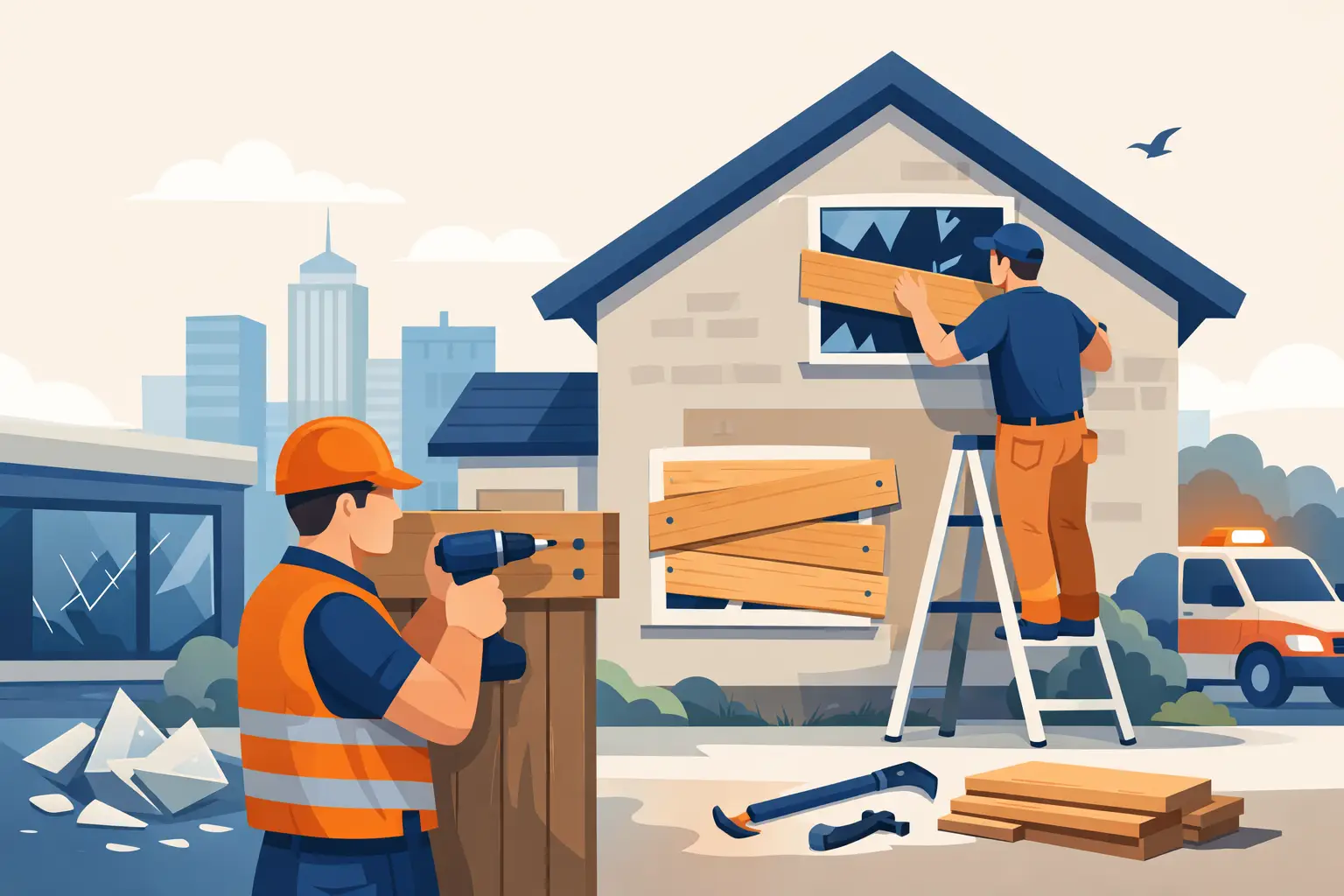
A smashed shopfront at closing time, a storm-damaged window in a rented flat, or a forced door at an empty commercial unit all create the same immediate problem: the property is no longer secure. This emergency boarding up guide sets out what to do in the first few hours, how temporary protection should work, and when to bring in a professional.
Boarding up is not simply about covering a hole. Done properly, it limits unauthorised access, protects people from broken glass and exposed edges, reduces weather damage, and helps keep a property operational while permanent repairs are arranged.
Make the area safe before securing it
Your first priority is people, not the opening. If there is broken glass, a damaged frame, loose roofing material, exposed electrical wiring or any sign of structural movement, keep staff, residents and visitors away from the affected area. Do not attempt a repair where there is a risk of falling materials, electrical shock or injury.
Where a break-in has occurred, avoid disturbing the scene more than necessary. Contact the police if required, take clear photographs for an insurer, and make a note of the time and visible damage. This provides a useful record without delaying essential measures to secure the building.
If water is entering the property, move stock, equipment, furniture and electrical items away from the opening where it is safe to do so. For commercial premises, isolate the affected space with barriers or clear signage. A damaged entrance can quickly become a public liability issue if customers or contractors can reach broken glass or an unsecured threshold.
Emergency boarding up guide: the first response
A temporary board should cover the damaged opening fully, be fixed securely, and avoid creating new damage to the surrounding frame or masonry. The right approach depends on whether the damage is to a window, glazed door, timber door, shopfront or roof-level opening.
In a straightforward ground-floor window emergency, a competent person may be able to apply a temporary covering while waiting for a glazing repair. However, there is a clear trade-off. A poorly fitted board can be easier to force than the original damaged unit, can trap moisture, and may cause further harm to frames or finishes. On commercial sites, vacant properties, communal areas and healthcare premises, professional boarding is usually the safer choice.
Take the following actions in order:
- Keep people clear of the damaged area and remove loose glass only if it can be done safely.
- Photograph the damage and notify the relevant insurer, managing agent, landlord or responsible person.
- Check whether the opening affects fire escape routes, security systems, access control or business operations.
- Arrange a secure temporary board or other suitable protection as soon as possible.
- Plan the permanent repair, rather than allowing a temporary measure to remain in place indefinitely.
Do not cover an emergency escape route without providing an agreed safe alternative. In a workplace, this may affect fire safety arrangements and should be managed by the duty holder. Likewise, do not block ventilation needed for plant rooms or specialist equipment without checking the operational consequences.
What a secure temporary board should achieve
The purpose of emergency boarding is to restore a reasonable level of safety and security until replacement glazing, doors or frames can be fitted. It should resist casual entry, reduce exposure to rain and wind, and keep sharp edges inaccessible.
For damaged windows and shopfronts, the board needs to extend beyond the broken area and be secured to sound material, not fragile remnants of the frame. Fixings should be chosen for the construction beneath them. Timber frames, aluminium systems, brickwork and curtain walling all require different methods. This is one reason a general approach is not always suitable.
A boarded door needs particular care. The door may be part of an access route, a fire door set, or an entrance controlled by a lock, intercom or alarm. Simply screwing a sheet over the opening may leave the property inaccessible to authorised users or compromise security elsewhere. A locksmith, glazier or maintenance team can assess whether a temporary lock, replacement cylinder, reinforced board or new door leaf is the best immediate solution.
At higher levels, safety requirements increase considerably. A damaged first-floor window, skylight or rooflight should not be tackled from a ladder without appropriate access equipment, training and controls. The risk of a fall is far greater than the benefit of a quick temporary fix.
Common situations and the right response
Break-ins and vandalism
Forced entry often damages more than the visible glass or door panel. Check locks, hinges, frames, shutters, alarms and nearby windows for signs of tampering. If a burglar has gained access once, an incomplete repair may invite a repeat incident.
A professional response can combine boarding, emergency glazing, locksmith work and adjustments to access control. This avoids the common gap between one contractor securing the opening and another later discovering that the lock or frame remains unsafe.
Storm, impact and accidental damage
Wind damage and accidental impact can leave openings exposed to rain long after the event itself. Here, weather protection matters as much as security. Water entering wall cavities, floor finishes, electrical systems or ceilings can turn a relatively contained glazing repair into a wider property maintenance issue.
Temporary boarding should therefore be followed by an inspection of internal finishes and surrounding materials. Look for damp patches, pooling water, swollen timber, damaged insulation and ceiling staining. Early action can limit disruption and protect the value of the property.
Empty and partially occupied properties
Vacant units are particularly vulnerable after a broken window or door. They may have limited lighting, no regular occupants and delayed reporting, which increases the risk of trespass, theft and further damage. Secure boarding should be paired with a check of all ground-level access points, gates, shutters and perimeter fencing.
For landlords and property managers, it is also worth confirming who holds keys, who can authorise works, and how contractors will gain access. Those practical details often determine whether an urgent repair is completed on the first visit.
Dental and healthcare-adjacent premises
Clinical environments need additional care. A damaged entrance or window can affect patient access, privacy, infection-control procedures and the operation of sensitive equipment. Any temporary works should be organised around the practice’s opening hours, safe routes for patients and the need to protect treatment areas from dust, water and unauthorised access.
In these settings, the fastest option is not always the best one. Clear communication and a coordinated repair plan matter just as much as immediate boarding.
Avoid these boarding-up mistakes
Using thin, damaged or badly cut sheet material may give the appearance of security without providing it. So can fixing boards only at a few points, leaving gaps around the edges, or attaching them to broken frames. Temporary tape and plastic sheeting can help reduce draughts or rain for a very short period, but they are not a substitute for secure boarding.
It is also a mistake to delay permanent repairs. Boards can deteriorate in poor weather, obstruct natural light, affect the appearance of a business and conceal further frame damage. They are a holding measure, not a finished repair.
Finally, avoid treating every emergency as a glazing-only issue. A damaged window can involve alarms, electrical fittings, water ingress, locks, shutters, ceilings and internal finishes. One coordinated inspection prevents separate problems being missed.
Choosing a professional emergency response
When calling for help, provide the property type, location of the damage, size and type of opening, whether the site is occupied, and any immediate hazards. Explain whether the issue affects access, security, weatherproofing or a fire escape route. Photos can help a contractor prepare the right materials before arrival.
For property managers and commercial operators, choose a provider that can manage the immediate securement and the follow-on works. That may include glazing, locksmith support, electrical checks, roofing repairs or general making-good. A single point of responsibility reduces delays and makes it easier to keep tenants, staff and customers informed.
MSM Site Solutions provides reliable 24/7 support for urgent property maintenance across Slough and surrounding areas, helping residential and commercial customers secure damaged premises and move quickly towards a lasting repair.
A damaged opening should never be left to become tomorrow’s larger problem. Secure the area, protect the people using the property, and put a clear repair plan in place while the incident is still manageable.
Leave a Reply