

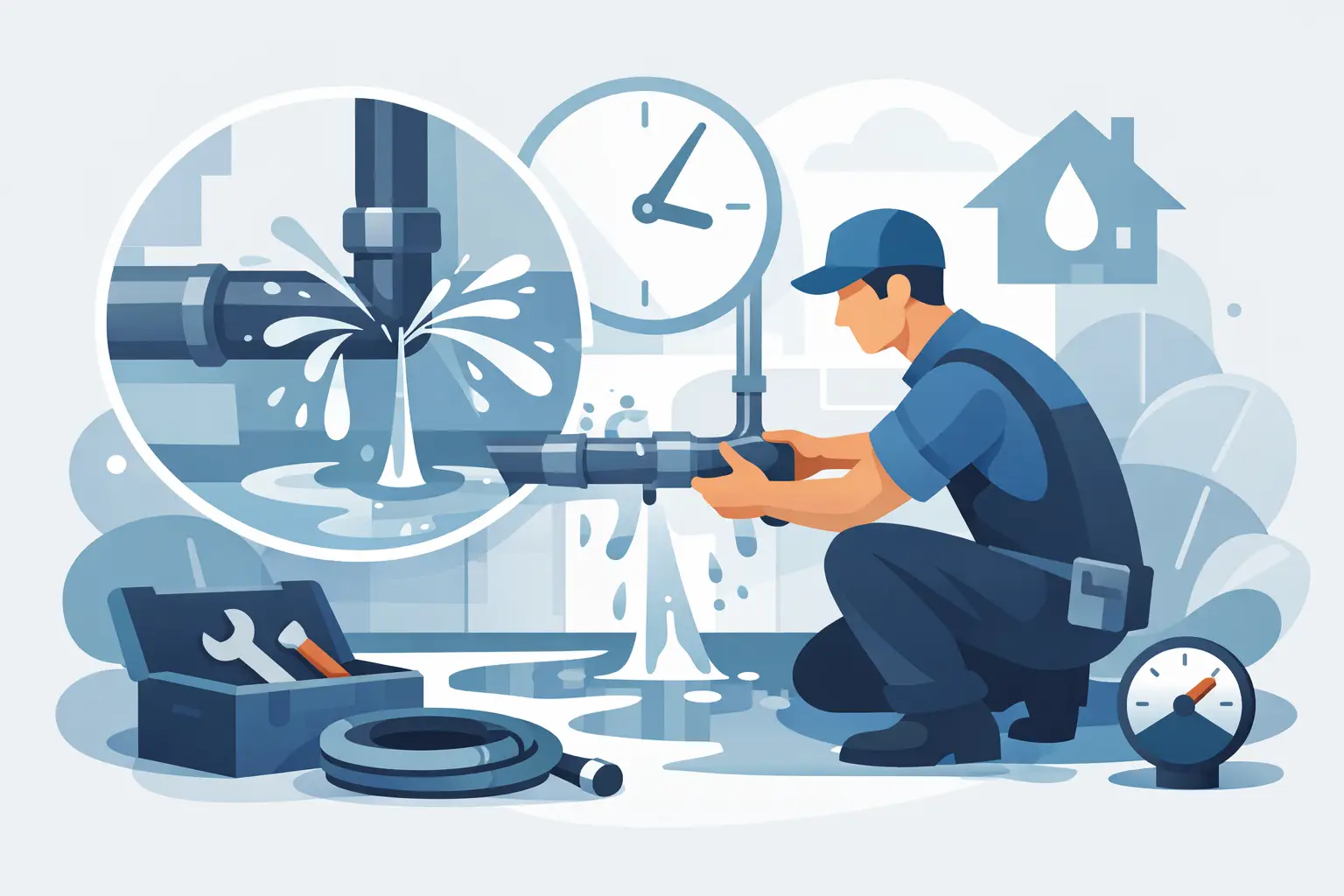
Water coming through a ceiling or spreading across a plant room is not the time for guesswork. If you need to know how to handle burst pipe issues quickly, the priority is simple: stop the water, make the area safe, and limit damage before repairs begin.
A burst pipe can turn from a minor plumbing failure into major disruption within minutes. For homeowners, that can mean damaged flooring, plaster, electrics and furniture. For landlords, facilities teams and commercial operators, it can also mean downtime, tenant complaints, health and safety concerns, and expensive reinstatement work. A fast, practical response makes a real difference.
How to handle burst pipe emergencies in the first few minutes
The first step is to shut off the mains water supply. In many properties, the internal stopcock is under the kitchen sink, in a utility area, downstairs cloakroom, plant room or near where the water supply enters the building. In larger commercial premises, there may be sectional isolation valves as well as a main incoming valve. If the burst is localised and you know which valve controls that area, isolating only that section can reduce disruption elsewhere.
Once the water is off, turn on cold taps to drain the system and reduce pressure in the pipework. Flush toilets if needed to empty stored water from cisterns. This will not solve the damage already caused, but it helps stop more water pushing through the split.
If water is near sockets, light fittings, distribution boards or electrical equipment, do not touch anything wet. Switch off the electricity at the consumer unit only if it is safe to do so and you can reach it without stepping into standing water. If there is any doubt, wait for a qualified professional. Water and electrics are not a risk worth taking.
Then move quickly to contain the spread. Use towels, buckets, bins or any available absorbent materials to catch drips and control pooling. In commercial settings, cordon off affected areas to protect staff, visitors or occupants from slips and electrical hazards. If water is coming through a ceiling, watch for signs of sagging. A ceiling holding water can fail suddenly.
Identify where the pipe has failed
Not every burst pipe is obvious. Sometimes the split is exposed under a sink or in a riser cupboard. Sometimes the failure is behind a wall, above a suspended ceiling, under flooring or in an unheated void. Signs often include a sudden drop in water pressure, unexplained watermarks, bulging decoration, damp smells, or the sound of running water when no outlets are in use.
In winter, frozen pipework is a common cause. Water expands as it freezes, putting pressure on the pipe until it cracks. The split may only become obvious once the ice thaws and water starts escaping. In older buildings, corrosion, poor previous repairs, movement in the structure or worn joints may be the underlying cause. In commercial buildings, heavily used systems, neglected maintenance and hidden leaks can all contribute.
Finding the source matters because it affects how the repair is approached. A visible copper pipe in a utility room is a very different job from a failed plastic fitting above a retail ceiling or a concealed leak affecting multiple units.
What you can do before the plumber arrives
Temporary action can reduce damage, but it should stay within safe limits. If the burst is accessible and still dripping after isolation because water remains in the line, dry the area as much as possible. A temporary pipe repair clamp, rubber patch or leak tape may help in some cases, but only as a short-term measure. These are not substitutes for a proper repair.
Avoid opening up walls, lifting large areas of flooring or cutting into ceilings unless you are certain it is necessary and safe. In managed properties or commercial premises, unplanned opening-up can create extra disruption and complicate insurance records. It is usually better to document the damage, isolate the supply and let the attending engineer assess the quickest controlled route to repair.
Take photos of the affected area, damaged finishes and any contents impacted by the leak. This is useful for insurance purposes, maintenance records and contractor handover. If you manage property on behalf of others, note the time the issue was discovered, when water was isolated and which areas were affected.
When to call emergency support
If the pipe has failed in a way you cannot isolate, if water is affecting electrics, or if the leak is causing active damage to ceilings, walls or critical business areas, treat it as an emergency. The same applies if the burst affects tenant spaces, communal systems, healthcare environments, kitchens, washrooms, or any area where continued operation matters.
This is where a responsive maintenance contractor matters. A burst pipe often does not sit neatly within one trade. You may need emergency plumbing first, but you may also need electrical safety checks, ceiling and wall repairs, drying support, joinery, flooring reinstatement or access works. For landlords, facilities managers and commercial operators, a single dependable provider reduces delay and confusion.
MSM Site Solutions supports both urgent call-outs and follow-on repair work, which helps keep properties safe and operational without clients having to coordinate multiple contractors under pressure.
How professionals handle a burst pipe repair
A proper repair starts with confirming the failed section and checking whether there is wider system damage. The engineer may inspect adjacent joints, pressure levels, signs of freezing, pipe supports, insulation and any hidden moisture spread. In a domestic setting, that may be straightforward. In a commercial property, tracing affected pipe runs can be more involved, especially where services pass through ceilings, service voids or shared building areas.
The damaged section is then removed or isolated and replaced using a suitable method for the pipe material and location. Depending on the system, that could involve copper, plastic or steel components, new fittings, valve replacement or a more substantial section renewal. Once repaired, the system should be tested carefully before the water is fully restored.
That is only part of the job. Good practice also means checking what the escaping water has affected. If moisture has reached electrics, saturated insulation, weakened ceilings or damaged finishes, those issues need addressing as well. Simply stopping the leak is not the same as returning the property to a safe, usable condition.
The hidden cost of waiting too long
A small delay can create a much larger repair. Water travels. It gets into floor voids, behind skirting, through insulation, across ceiling grids and into adjacent rooms. What looks like one burst pipe can quickly lead to mould risk, damaged decorations, swollen joinery, stained ceilings and compromised electrical systems.
For commercial operators, there is also the operational cost. A burst in an office, shop, practice or managed block can interrupt trading, displace occupants and trigger wider compliance concerns. In healthcare-adjacent settings such as dental facilities, a plumbing emergency may affect hygiene standards, room availability and day-to-day service continuity. That is why speed matters, but so does competent follow-through.
How to reduce the risk of another burst pipe
Prevention is usually cheaper than emergency response. In colder months, pipe insulation is one of the simplest ways to reduce freezing risk, especially in lofts, outbuildings, plant spaces and exposed service runs. Properties left vacant or lightly used over winter need extra attention, because stagnant water and low background heating increase vulnerability.
It also helps to know where your stopcock and isolation valves are before there is a problem. In managed premises, staff or site contacts should know this too. If a tenant, caretaker or duty manager loses ten minutes looking for a valve, that can mean a lot more damage.
Routine inspections matter more in older buildings and mixed-use sites. Look out for signs of corrosion, poor insulation, loose pipe clips, staining around joints and any history of pressure issues. If a property has had repeated leaks, patch repairs may not be enough. At that point, a broader review of the plumbing system is often the better long-term decision.
How to handle burst pipe incidents with tenants or site teams
Clear communication helps keep the situation under control. Tell occupants what has happened, which areas are affected, whether the water or power is isolated, and what immediate precautions they need to follow. In shared or commercial buildings, this prevents confusion and reduces the risk of someone entering an unsafe area or turning services back on too early.
For landlords and facilities managers, it is worth having a simple emergency process written down. It does not need to be complicated. People just need to know who to call, where the shut-off points are, and how to report damage fast. A practical response plan saves time when pressure is high.
A burst pipe is disruptive, but it does not have to become a bigger crisis. Act quickly, isolate safely, protect the property and get the right repair support in place. The calmest response is usually the most effective one.
Leave a Reply