

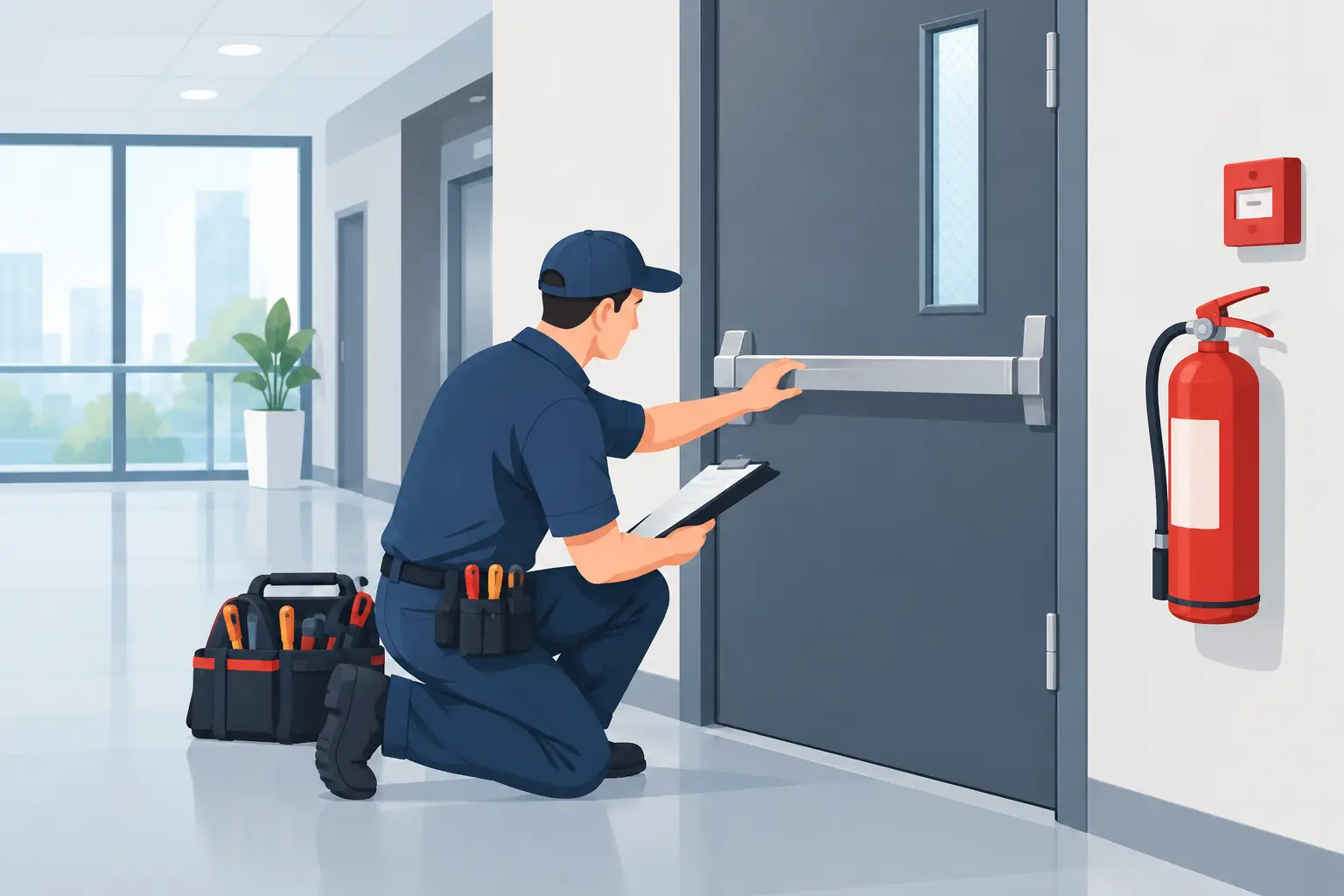
A fire door that sticks, is wedged open or no longer closes fully can compromise a building’s fire safety strategy in seconds. Knowing how to maintain fire doors is therefore not simply a maintenance task. For landlords, facilities managers and commercial operators, it is a practical way to protect people, support compliance and limit disruption should a fire occur.
Fire doors are designed to hold back fire and smoke for a specified period, giving occupants more time to leave safely and helping emergency services control the incident. They only work as intended when the door, frame, seals, hinges, closer and ironmongery are all in good working order. A smart maintenance plan combines routine in-house checks with planned inspections and prompt repairs by competent professionals.
Start with a clear fire door register
The first step is to know where every fire door is located and what role it performs. This is particularly important in larger residential blocks, offices, retail premises, schools, dental practices and other healthcare-adjacent settings, where different areas may have different fire-risk requirements.
Create and maintain a register that identifies each fire door by location, rating where known, condition, inspection date, defects found and repair actions. Include doors protecting stairwells, corridors, plant rooms, risers, communal areas, kitchens and routes leading to final exits.
A register makes responsibility clearer when several people manage a property. It also gives you an evidence trail for planned maintenance, contractor visits and corrective work. If a defect is found repeatedly, the record can help establish whether the cause is poor adjustment, heavy traffic, misuse or a wider issue with the building.
How to maintain fire doors through routine checks
Routine checks do not replace a formal inspection, but they are an effective early-warning measure. The frequency should reflect your fire risk assessment, the building’s use and the amount of traffic through each door. A heavily used corridor door in a commercial building may need more frequent attention than a rarely used store-room door.
A responsible member of staff can carry out visual checks, provided they understand what to look for and know when to escalate an issue. For occupied buildings, regular checks are especially valuable after building works, office moves, deliveries or changes to access control.
Look for these common problems:
- The door is propped or wedged open, preventing it from containing fire and smoke.
- The door does not close fully into the frame from any open position.
- The leaf, frame, glazing or vision panel is cracked, split, loose or visibly damaged.
- Intumescent or smoke seals are missing, painted over, torn, loose or contaminated.
- Hinges, handles, latches, locks, signs or closers are loose, damaged or not operating correctly.
- Gaps around the door appear excessive or inconsistent, allowing smoke or fire to pass through.
Take doors out of normal use where necessary, particularly if they cannot close and latch. The exact response depends on the door’s location and the building’s fire strategy, so avoid makeshift repairs that could make the problem worse. Report the issue promptly and arrange assessment by a competent fire door professional.
Check that the door closes, latches and seals
The closing action is one of the most important tests. Open the door to around halfway and allow it to close under the power of its closer. It should move smoothly, close fully against the frame and engage the latch without being forced, slammed or held back.
A door that closes too slowly may not overcome air pressure, floor finishes or a poorly adjusted latch. One that slams can damage hinges, closers and frames over time, as well as causing users to wedge it open. The solution may be a closer adjustment, but this should be carried out carefully by someone who understands the door assembly. Altering a closer without checking the whole operation can create a different fault.
Inspect the seals around the top and vertical edges of the door. Intumescent strips expand when exposed to heat, helping to close gaps between the door and frame. Where smoke seals are fitted, they help limit smoke spread in normal conditions before the intumescent material activates. Both need to be continuous, securely fixed and free from paint, damage and obstruction.
Never plane, drill, cut or alter a fire door to solve a sticking problem without specialist advice. Small changes to the leaf, frame, seals or hardware can affect its fire performance. This includes fitting unauthorised locks, access-control equipment, kick plates, signage or replacement glazing.
Pay attention to hinges, closers and hardware
Fire doors rely on more than the door leaf. Hinges must be secure, correctly fixed and free from excessive wear. Missing screws, loose hinge leaves, oil staining or visible movement can indicate a problem that needs attention. In many cases, a fire door is fitted with at least three suitable hinges, but the correct specification will depend on the door set and its rating.
Closers should be firmly attached, without leaks, loose arms or damaged fixings. The door should not catch on carpet, thresholds or floor coverings. Changes to flooring are a common source of problems, especially following refurbishment. A new carpet tile, mat or threshold strip can stop a previously compliant door from closing properly.
Latches and locks also need regular checks. Where a fire door is designed to latch, the latch must engage consistently. Do not assume that a door is safe because it looks closed. If it can be pushed open without operating the handle, or if the latch strikes the frame, it needs adjustment or repair.
Manage glazing, signs and access control carefully
Glazed panels in fire doors must be intact and held in place with compatible glazing systems. A cracked vision panel, loose bead or damaged seal should be treated as a priority repair. Do not replace fire-resisting glass with standard glazing, even as a temporary measure.
The same care applies to signs and notices. Small signs may seem harmless, but excessive adhesive, screws or poorly placed fittings can damage the door leaf or conceal deterioration. Use suitable signage and keep it to what is required for safe use of the building.
Access control, electromagnetic hold-open devices and automatic release systems can be appropriate in busy premises, but they must work with the fire alarm arrangement. A hold-open device should release the door when required by the system. If staff are using wedges because a door is inconvenient, the problem is operational as well as technical. Review traffic flow, access arrangements and whether an approved hold-open solution is needed.
Plan inspections around risk and building use
There is no single inspection interval that suits every premises. The right programme depends on the fire risk assessment, occupancy, door condition, building layout and how frequently each door is used. High-use doors and communal routes need closer attention than low-traffic doors in secure areas.
Planned inspections should be more detailed than routine visual checks. They should assess the full door assembly, identify defects, record recommendations and confirm that repairs have been completed. For multi-site operators, consistent reporting is particularly useful because it helps prioritise spend and prevents minor defects from being lost between contractors or site teams.
Fire door maintenance should also be coordinated with broader building maintenance. Roofing leaks, plumbing failures, damp, impact damage and poorly managed refurbishment work can all affect door frames, finishes and hardware. A single facilities partner can make this easier by managing defects across trades rather than treating each issue in isolation.
Respond quickly when defects are found
Delaying a repair can turn a small adjustment into a replacement job. A loose closer, failing latch or damaged seal is usually simpler to address early, before repeated use damages the leaf or frame. It also reduces the risk of a fire door being left propped open because it has become difficult to use.
For urgent issues, make the area safe in line with your building procedures and arrange a competent assessment without delay. Keep records of the defect, the action taken and any temporary management measures. This is especially relevant for landlords and facilities teams responsible for occupied premises, where clear communication prevents uncertainty among staff, tenants and visitors.
At MSM Site Solutions, planned and reactive property maintenance can help keep fire door issues visible, recorded and addressed alongside the wider needs of your building. The most useful fire door maintenance plan is the one your team can follow consistently – with clear checks, prompt reporting and trusted support when a repair is needed.
Leave a Reply