

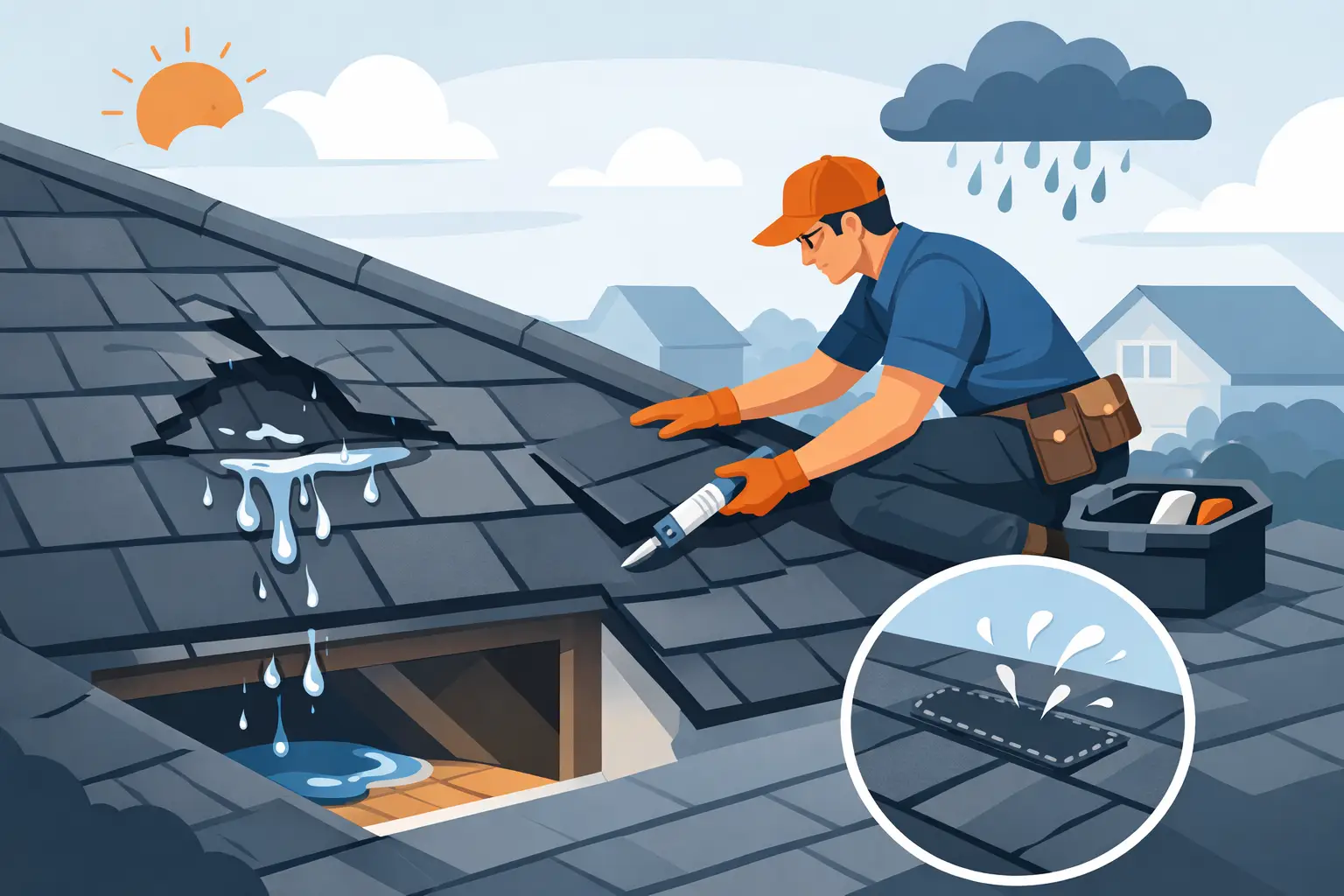
A water stain on the ceiling rarely stays as just a stain for long. What starts as a small drip can quickly turn into damaged plaster, soaked insulation, electrical risk and disruption for tenants, staff or customers. That is why a professional roof leak repair service matters – not simply to stop water getting in today, but to prevent a much larger repair problem tomorrow.
For property owners and facilities managers, speed is only part of the job. The real value is in finding the source properly, making the repair hold, and protecting the rest of the building from follow-on damage. A patch that fails after the next spell of rain is not a solution. It is just a delay.
What a roof leak repair service should actually deliver
A dependable roof repair response starts with accurate diagnosis. Roof leaks are not always where they first appear internally. Water can track along timbers, insulation, membranes and voids before it shows on a ceiling tile or internal wall. In commercial premises, that can affect operations. In residential properties, it can lead to repeat call-outs, unhappy tenants and avoidable remedial work.
A proper service should identify where water is entering, assess how far it has spread and deal with both the immediate defect and any surrounding weakness. That may involve damaged tiles or slates, split felt, failed flashing, blocked gullies, cracked flat roof coverings, deteriorated seals around rooflights, or defects around vents and penetrations.
The difference between a quick temporary stop and a lasting repair depends on access, roof type, weather conditions and the age of the roof. In some cases, an emergency measure is the right first step, particularly if heavy rain is ongoing or the area needs to be made safe quickly. But that should lead into a planned permanent repair, not be treated as the finished job.
Common causes behind recurring leaks
Many leaks are blamed on age alone, but the cause is often more specific. Pitched roofs can fail because a few slipped tiles have exposed the underlay, ridge lines have loosened, or lead flashing has lifted around chimneys and abutments. Flat roofs often suffer from splits, blistering, ponding water or failed joints where materials have expanded and contracted over time.
Drainage is another common issue. Blocked gutters and outlets can force water back into places it should never reach. On larger buildings, a drainage fault may look like a roof covering problem at first glance. On residential properties, a leak near the edge of a room may point to overflowing gutters rather than a major roofing failure.
There is also the question of previous workmanship. Short-term patch repairs, poor detailing around penetrations and incompatible materials can all create repeat leaks. This is why a thorough inspection matters. If the visible problem is repaired but the underlying weakness remains, the leak usually returns.
Why leak location can be misleading
Ceilings do not always tell the truth. Water can enter at one point and travel several metres before it becomes visible indoors. In loft spaces and service voids, it may follow the easiest path along timber, pipework or cable routes.
That matters for landlords, property managers and commercial operators because internal signs alone do not reveal the full story. A targeted roof inspection saves time, reduces repeat attendance and helps avoid repairing the wrong area.
Roof leak repair service for residential and commercial properties
The priorities differ slightly depending on the building, but the need for a reliable response is the same. In a house or flat, the immediate concern is protecting the living space, contents and any electrical fittings affected by water ingress. In rental property, speed also matters for tenant welfare and to limit complaint escalation.
In commercial buildings, the stakes can be higher. A leak can interrupt trading, damage stock, affect staff safety or create issues in compliance-sensitive environments. Offices, retail units, managed blocks and healthcare settings all need repairs carried out with minimal disruption and clear accountability.
That is where working with a multi-trade provider can make a practical difference. Roof leaks often trigger more than one problem. You may need temporary protection, ceiling repairs, electrical checks, glazing inspection, drainage clearance or wider building maintenance once the water ingress is under control. Coordinating separate contractors slows everything down. A single responsive team simplifies the process and keeps responsibility clear from first attendance through to completion.
What to expect during the repair process
The first priority is making the area safe and limiting further damage. That may include isolating affected electrics, protecting internal areas and carrying out an external inspection as soon as safe access is possible. Once the likely entry point has been identified, the repair approach depends on the condition of the roof and the urgency of the situation.
If the defect is isolated and accessible, a permanent repair may be completed straight away. This could include replacing broken roofing materials, resealing joints, repairing flashing or addressing localised flat roof damage. If weather or site conditions prevent a full repair on the first visit, a temporary weatherproof measure may be needed to stabilise the situation until permanent works can be completed safely.
Communication matters throughout. Property owners and facilities teams need a clear explanation of what has failed, whether any associated areas are at risk and what follow-up work is sensible. The strongest repair service does not overstate the issue, but it does not underplay the risks either.
Emergency repair versus wider roof work
Not every leak means the whole roof has failed. Sometimes a local repair is entirely appropriate and cost-effective. In other cases, a leak is the first visible sign of broader deterioration.
The right decision depends on the roof’s age, the number of existing defects, the extent of trapped moisture and whether similar issues have already been repaired before. If a roof is suffering from repeated failures in different locations, a series of isolated fixes can become false economy. A good contractor should be honest about that balance.
Choosing a roof leak repair service that reduces repeat problems
Fast attendance is important, but not enough on its own. The right contractor should have experience across different roof types, understand fault-finding rather than just surface patching, and be able to deal with associated building issues caused by the leak.
For landlords and commercial clients, responsiveness should also come with proper reporting and a dependable standard of work. You need to know what was found, what was done and whether anything else needs attention. That is especially important when managing multiple sites or when responsibility needs to be demonstrated to tenants, insurers or internal stakeholders.
Local coverage also matters. A contractor working in and around Slough can usually respond faster, assess weather exposure and building types more practically, and return promptly if follow-on works are needed. MSM Site Solutions supports property owners and operators who need that kind of responsive, end-to-end maintenance approach rather than a one-off fix with no continuity.
Preventing the next leak after the repair
A repair should solve the immediate problem, but prevention protects the budget. Routine roof checks, especially after heavy wind and rain, help catch defects before they lead to internal damage. For commercial properties and managed buildings, planned maintenance is often the most sensible route because it reduces reactive cost and limits operational disruption.
Simple issues such as blocked gutters, debris build-up and minor flashing defects are far cheaper to address early than after water has reached ceilings, finishes and electrical systems. For facilities managers, it is not just about preserving the roof. It is about keeping the whole property operational.
Where buildings have more complex requirements, such as healthcare-adjacent environments or specialist commercial spaces, maintenance planning becomes even more important. Water ingress in those settings can affect hygiene, business continuity and client confidence as well as the building fabric itself.
A roof leak rarely arrives at a convenient time, and it rarely affects just one element of the property. The best response is calm, quick and properly executed – the kind that stops the immediate issue, protects the wider building and gives you confidence the repair will hold when the weather turns again.
Leave a Reply