

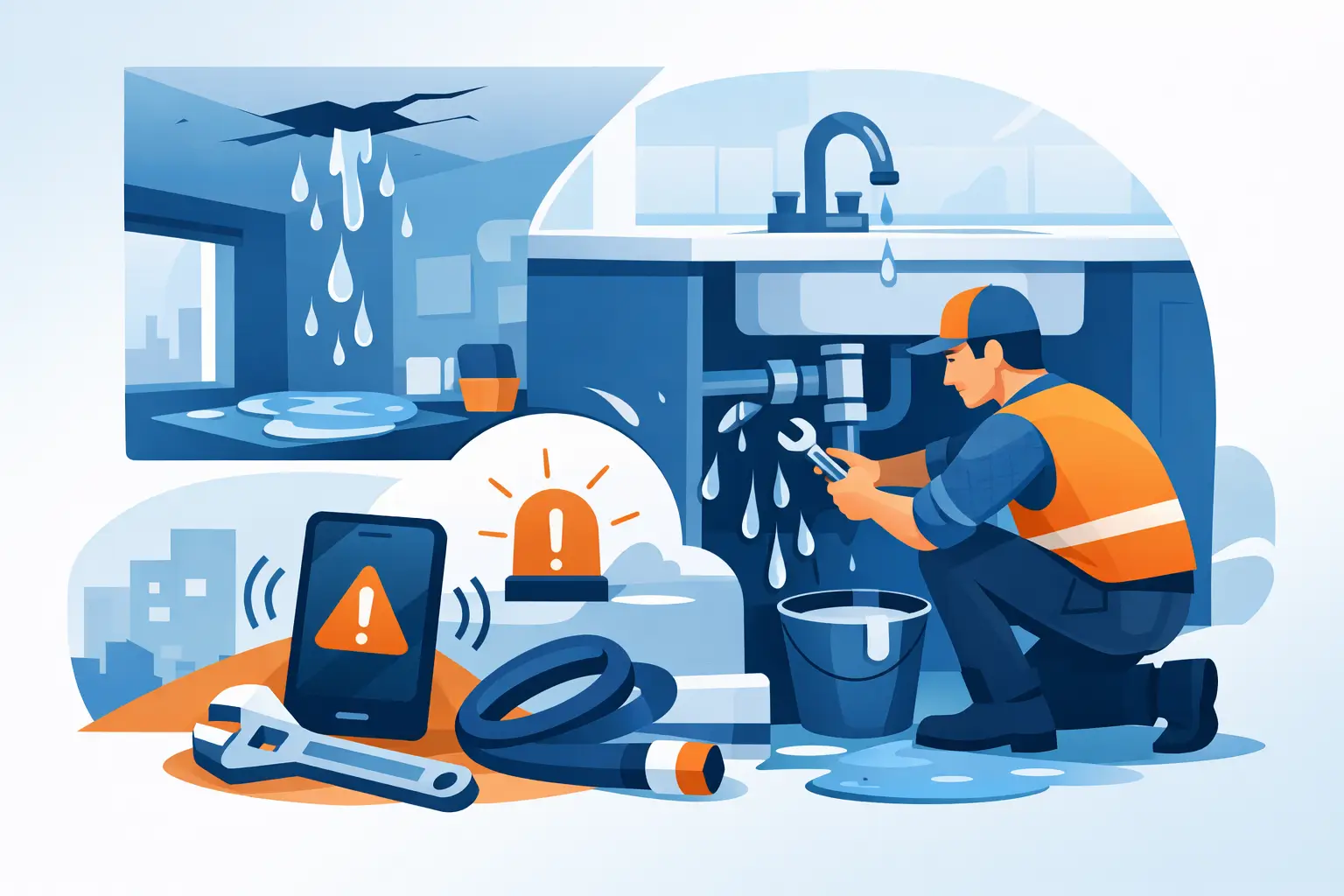
A burst pipe at 2am, water coming through a ceiling in a let property, or a leak spreading across a commercial unit can move from inconvenience to serious damage in minutes. Water leak emergency repair is about more than stopping water – it is about protecting electrics, reducing disruption, preventing structural damage, and getting a property safely back into use.
For landlords, property managers, facilities teams and business owners, the first few actions matter. So does the quality of the response. A temporary fix that holds for an hour but fails again the next day can turn a manageable repair into a much larger problem, especially where tenants, staff, customers or specialist environments are involved.
Why water leaks become emergencies so quickly
Not every leak starts dramatically. Some begin as a small drip under a sink, a damp patch near pipework, or a stain on a ceiling tile. The problem is that water rarely stays where it first appears. It can travel through voids, behind walls, under flooring and along service routes before the full extent becomes obvious.
In residential property, that often means damaged plaster, flooring, decorations and belongings. In commercial settings, the risks widen. Leaks can interrupt operations, affect stock, create slip hazards, damage electrical systems and force parts of a building out of use. In healthcare and dental environments, even a relatively localised leak can create hygiene concerns and operational disruption that needs managing carefully.
That is why emergency response is not just about speed for the sake of it. It is about containing loss, making the area safe, and identifying whether the issue is a failed fitting, damaged pipe, faulty appliance connection, roof ingress or something more complex hidden within the building fabric.
First steps before water leak emergency repair begins
If water is actively escaping, the immediate priority is to reduce the flow and make the area safe. In most buildings, that means locating and turning off the main water supply or the nearest isolation valve if the leak is limited to a specific fixture or section of pipework.
If water is close to sockets, lighting, fuse boards or electrical equipment, avoid contact with affected areas and isolate the power if it is safe to do so. Where there is any doubt, treat electrics and standing water as a high-risk combination and wait for a qualified professional. Safety comes first, especially in occupied buildings and commercial premises.
Next, move what you can. Protect stock, furniture, equipment, documents and floor finishes where possible. Buckets and towels may help briefly, but they do not resolve the underlying issue. A fast repair response is still needed, even if the leak seems to slow once the supply is isolated.
It also helps to note where the leak appears to originate, when it started, and whether there are any signs elsewhere in the property such as low water pressure, staining, dripping from ceilings or unusual sounds in walls. Those details can speed up diagnosis when the engineer arrives.
What a proper emergency repair should include
A dependable water leak emergency repair service does not simply patch the first visible point and leave. The real job is to identify the source, assess any wider damage, stop the leak effectively and decide whether an immediate permanent repair is possible or whether a controlled temporary measure is needed until further work can be completed safely.
That distinction matters. Sometimes the right approach is a same-visit permanent repair, such as replacing a failed valve, tightening or renewing a joint, or cutting out and replacing damaged pipework. In other cases, access is restricted, parts are specialist, or the leak is linked to wider defects such as failed roofing, concealed services or damaged drainage connections. In those situations, a temporary containment measure may be sensible – but only if it is stable, clearly explained, and followed by a plan for full remedial work.
For property managers and commercial operators, communication is a big part of the service. You need to know what has failed, what has been made safe, whether the property can remain in use, and what follow-on work is required. A good emergency response should reduce uncertainty, not add to it.
Common sources of emergency leaks
Pipework failures are one of the most common causes. These can result from age, corrosion, poor previous repairs, freezing conditions, accidental damage or pressure issues. Flexible hoses under sinks and basins are another regular weak point, particularly in older kitchens, washrooms and commercial fit-outs.
Leaks also come from tanks, toilets, taps, heating pipework and appliance connections. In multi-unit buildings, the source may even be in a neighbouring flat or on an upper floor, while the visible damage appears elsewhere. Roof leaks can present in a similar way, with water entering at one point and appearing some distance away.
This is where experience across multiple trades helps. Water ingress is not always just a plumbing problem. It can involve roofing, glazing, internal fabric repairs, electrical safety checks and making good afterwards. For busy sites, using one provider that can manage those connected issues saves time and avoids gaps between trades.
Water leak emergency repair in occupied and commercial properties
Emergency repairs in an empty property are one thing. In occupied homes, rental properties, offices, retail units and healthcare settings, the job is more demanding because the response has to balance technical repair with people, access and continuity.
For landlords, leaks can affect tenant safety and quickly become disputes if damage spreads or response times are slow. For facilities managers, every hour of disruption can affect staff, customers and compliance. For dental and healthcare-adjacent premises, there may be treatment rooms, specialist equipment and strict expectations around cleanliness and uptime.
That means emergency repair needs to be practical as well as fast. Safe isolation, tidy working, clear updates and coordinated follow-on works all make a difference. In many cases, the best outcome is not just stopping the leak quickly, but restoring normal operations with as little interruption as possible.
When a leak is not as simple as it looks
Some leaks are obvious. Others are symptoms of a wider issue. Repeated failures at the same joint, persistent damp after a repair, pressure loss, staining that keeps returning, or leaks that appear only during certain weather conditions all suggest the first visible problem may not be the whole story.
This is where a rushed fix can be expensive. If a ceiling is repaired before the true source is resolved, or if pipework is patched without checking adjacent sections, the property owner often pays twice – once for the emergency attendance and again for repeat damage.
A measured response is usually the better one. That means tracing the fault properly, checking for related damage, and recommending the right next step, whether that is a direct repair, a wider replacement, or additional works to prevent the issue returning.
The value of a single contractor during an emergency
Leak incidents rarely stay within one trade. Water may affect plaster, ceilings, flooring, decorations, locks, alarms or electrics. In commercial buildings, it may also affect access routes, suspended ceilings, washroom facilities and working areas that need to be made safe quickly.
Using one dependable contractor to coordinate emergency plumbing alongside electrical checks, building repairs and follow-on maintenance reduces delay and confusion. It also gives property owners and site managers a clearer line of accountability. You are not trying to organise several separate companies while water is still affecting the building.
That joined-up approach is especially useful for portfolios, managed properties and operational sites where speed, reporting and consistency matter as much as the repair itself. This is where a provider such as MSM Site Solutions can add real value, because the response is built around keeping properties operational, safe and properly supported beyond the first call-out.
Preventing the next emergency
Not every water leak can be predicted, but many can be reduced through planned maintenance and routine checks. Ageing valves, poor-quality flexible connectors, deteriorating sealants, hidden pipe corrosion and neglected roof defects often give some warning before they fail completely.
For landlords and facilities teams, regular inspections are often more cost-effective than repeated reactive repairs. The same applies to commercial washrooms, kitchens, plant areas and service risers where minor defects can escalate without much notice. A reactive call-out solves the immediate problem. A maintenance-led approach lowers the chance of being in the same position again next month.
The right balance depends on the building. A single residential property may only need sensible periodic checks, while a commercial site or specialist healthcare environment often benefits from a more structured maintenance plan. Either way, prevention is usually cheaper than interruption, damage and emergency attendance.
When water starts escaping, time matters – but so does getting the job handled properly. A calm, capable response protects the building, reduces downtime and helps you move from immediate problem to lasting repair with confidence.
Leave a Reply