

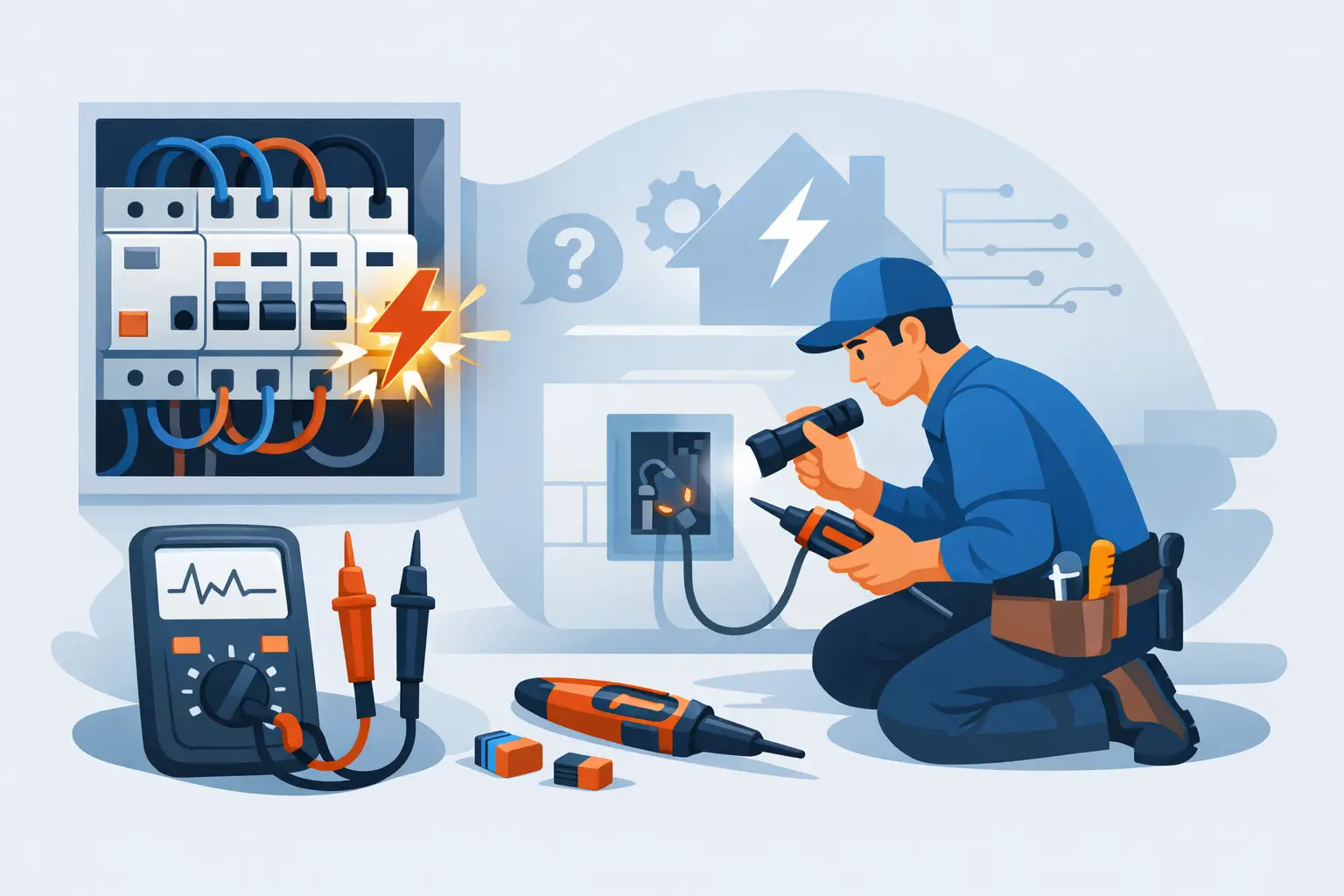
A tripped circuit breaker at the start of a working day can stop far more than the lights. It can take out IT equipment, refrigeration, heating controls, security systems or essential clinical equipment. This guide to electrical fault finding helps property owners and facilities managers recognise the signs, take the right immediate action and arrange a safe, efficient repair without creating further risk.
Start with safety, not the consumer unit
Electrical faults are not always obvious. A circuit may trip repeatedly, sockets may feel warm, lights may flicker or one area of a building may lose power without warning. The cause could be a faulty appliance, damaged wiring, water ingress, an overloaded circuit or a failing protective device. Treat the symptom seriously, particularly in older properties, high-use commercial spaces and premises where continuity matters.
Do not remove consumer unit covers, handle exposed wiring or keep resetting a breaker that immediately trips. Fault finding often requires testing on isolated and, in some cases, live circuits. This work should be carried out by a competent electrician using the correct equipment and safe isolation procedures.
If there is smoke, burning smell, sparking, visible damage, an electric shock, or water near electrical equipment, switch off the supply only if it is safe to do so. Keep people away from the area and arrange urgent professional assistance. Where there is a fire or immediate danger to life, contact the emergency services first.
What a tripped breaker is telling you
Consumer units are designed to disconnect power when they detect a problem. Resetting a device may restore supply temporarily, but it does not remove the underlying fault. The type of device that has tripped gives an electrician a useful starting point.
An MCB, or miniature circuit breaker, usually trips when a circuit is overloaded or there is a short circuit. This may happen when too many high-load items are used on one circuit, such as heaters, kettles, microwave ovens or portable air conditioning units. It can also point to a damaged cable, a faulty socket or a failed appliance.
An RCD, or residual current device, trips when it detects current leaking to earth. This protection is particularly important because it helps reduce the risk of electric shock. RCD trips are commonly associated with faulty appliances, moisture, damaged flexes, outdoor circuits, heating elements or wiring deterioration. An RCBO combines both forms of protection for an individual circuit.
The distinction matters, but it is not a diagnosis on its own. A qualified electrician will test rather than guess, especially where a fault is intermittent.
Record the symptoms before electrical fault finding begins
Clear information shortens attendance time and helps prevent unnecessary disruption. Before arranging a visit, make a note of when the problem began, which rooms or areas are affected, and what was in use at the time. A repeated fault after rain, for example, can point towards external lighting, roof-related water ingress or an outdoor socket. A trip that occurs only when a dishwasher, boiler or hand dryer operates may indicate an appliance or dedicated circuit issue.
For managed properties, staff should report the practical impact as well as the electrical symptom. Is a server room losing cooling? Are emergency lights affected? Has a dental surgery lost power to a treatment area? This allows the response to be prioritised around safety and operational continuity.
Photographs of the consumer unit in its normal, closed condition and details of any labels can be useful. Do not photograph or touch exposed conductors. It is also sensible to record previous repairs, recent alterations, water leaks and new equipment added to the property. These details often reveal the pattern behind a recurring fault.
A safe guide to electrical fault finding in occupied properties
For landlords and facilities teams, the first objective is to make the area safe and limit downtime. The second is to avoid losing evidence of the fault through repeated resets or unplanned changes to connected equipment.
Where it is safe and appropriate, switch off and unplug portable appliances on the affected circuit before attempting a single reset of the protective device. If it remains on, reconnect items one at a time and stop immediately if it trips again. This can help identify a clearly faulty portable item. Do not continue this process where there are signs of overheating, damage, water exposure or an RCD that will not reset.
Fixed equipment needs more caution. Boilers, extraction systems, electric showers, commercial kitchen equipment, ventilation units and dental equipment may have dedicated supplies or isolation points. Do not disconnect or dismantle these systems unless you are authorised and competent to do so. The appliance may not be the fault, and incorrect handling can make a repair more difficult or create a safety issue.
A professional electrician will usually work through a structured process: confirm the reported symptoms, inspect the installation, isolate sections of the circuit and carry out appropriate electrical tests. These may include continuity, insulation resistance, polarity, earth fault loop impedance and RCD testing. The results identify whether the issue lies with the fixed wiring, a protective device, an accessory, an appliance or a connected piece of equipment.
Common faults and what they can mean
Flickering lights are sometimes caused by a loose lamp or incompatible LED fitting, but they can also indicate a loose connection in a fitting, switch or circuit. If several lights flicker, or the issue affects more than one circuit, it requires prompt investigation.
Warm sockets, switches or plugs should never be ignored. Heat can result from loose terminals, overloaded outlets, worn accessories or damaged plugs. Remove the affected item from use where safe, isolate the circuit if necessary and arrange an inspection. Scorch marks, discolouration and a crackling sound are urgent warning signs.
A socket that has stopped working may be a local accessory fault, but it can also be linked to a damaged cable or a problem elsewhere on a ring final circuit. Avoid relying on extension leads as a permanent workaround. They can introduce extra load, trailing-cable risks and further overheating.
Outdoor faults often become apparent after wet weather. External lighting, garden supplies, gates, signage and sockets are exposed to moisture, physical damage and ageing seals. The solution may be as simple as replacing a damaged fitting, but it may also involve tracing water ingress and improving the suitability of equipment for its location.
The hidden causes: moisture, wear and changing use
Electrical installations are affected by how a property is used. A circuit that was adequate for a small office may become overloaded after extra workstations, printers, heaters and kitchen appliances are introduced. A retail unit may add display lighting and refrigeration. A rental property may see frequent appliance changes. In each case, the original circuit arrangement may no longer reflect the load placed upon it.
Moisture is another frequent cause of intermittent faults. Leaks from roofs, pipework, bathrooms or plant areas can affect light fittings, junctions and cabling routes. Electrical fault finding should therefore sit alongside wider property maintenance. Repairing the tripping circuit without addressing the source of water may only provide a short-term result.
Age also matters, although an older installation is not automatically unsafe. What matters is its condition, protection, previous alterations and suitability for current use. Damaged accessories, poor historic workmanship and unsupported additions can all create faults that only emerge under load.
When an emergency response is the right choice
Not every electrical issue needs an immediate call-out, but delays are not sensible where safety or essential operations are affected. Urgent attendance is appropriate when a fault involves burning smells, repeated RCD tripping, loss of critical power, exposed electrical parts, water near electrics or failure of safety-related systems.
Commercial operators should have a clear escalation route for electrical incidents. This should identify who can authorise an emergency repair, where the consumer unit and isolation points are located, and which services need protecting first. For healthcare-adjacent sites and dental practices, the plan should also consider patient safety, equipment shutdown procedures and the need to keep clinical areas operational where possible.
MSM Site Solutions provides dependable 24/7 support for electrical issues across Slough and surrounding areas, helping property managers and operators secure faults, restore safe service and coordinate related maintenance where required.
Preventing repeat faults through planned maintenance
Reactive repairs restore power, but planned maintenance reduces the chance of the same disruption returning. Regular inspection identifies loose accessories, deteriorating fittings, overloaded circuits and signs of water damage before they become an emergency. Periodic inspection and testing also provides a clearer picture of an installation’s condition and any remedial work needed.
For landlords, this supports safe, well-maintained homes and helps avoid avoidable tenant disruption. For facilities managers, it protects business continuity and provides a better basis for budgeting. High-use areas such as kitchens, plant rooms, communal spaces and external facilities deserve particular attention because they experience more wear, moisture or heavy electrical demand.
It also pays to review temporary measures. Extension leads, multi-way adaptors and portable heaters can solve a short-term problem, but they are often evidence that the fixed installation no longer suits the building’s needs. A properly designed additional circuit or upgraded outlet arrangement is usually the safer long-term answer.
Keep the response practical and documented
Once the repair is complete, retain a clear record of the fault, the tests carried out, the remedial work completed and any recommendations. This is useful for compliance, future maintenance planning and identifying patterns across a portfolio. If a fault has been caused by water ingress, appliance failure or excessive loading, make sure the responsible issue is addressed rather than simply resetting the circuit.
The best electrical fault response is calm and methodical: protect people, isolate risk, record what happened and bring in competent support early. That approach keeps a minor electrical issue from becoming a longer outage, a damaged installation or an avoidable risk to the people using your property.
Leave a Reply