

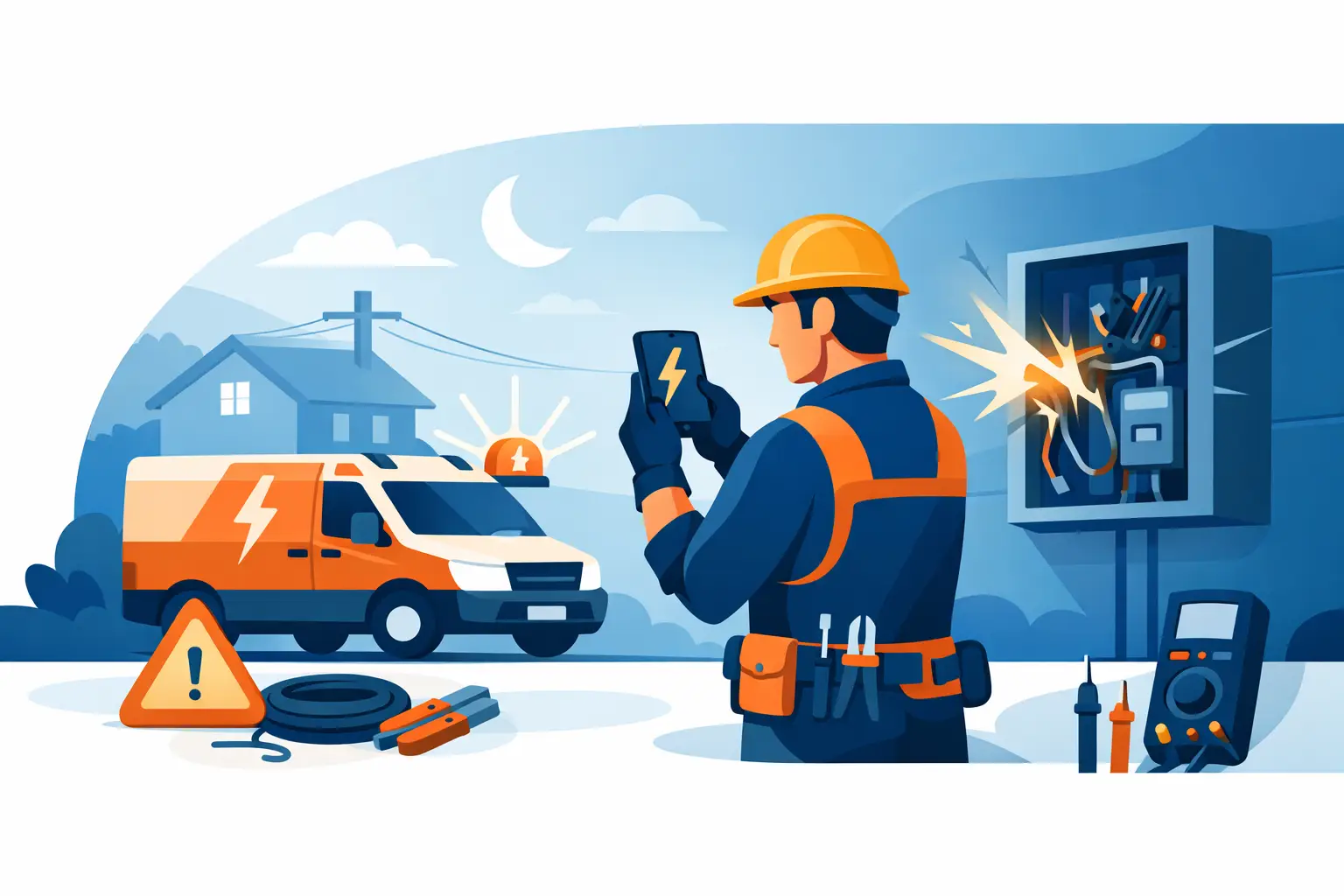
A sudden power cut in one unit, a burning smell from a socket, lights flickering across a commercial floor – these are the moments when knowing when to call emergency electrician support matters. The right response can protect people, prevent further damage and get your property back to a safe working condition quickly.
Not every electrical fault is an emergency, but some situations should never be left until the next working day. For landlords, property managers, facilities teams and business owners, delays can mean safety risks, downtime, damaged equipment and unhappy occupants. In healthcare and specialist commercial environments, the impact can be even more serious.
When to call emergency electrician support immediately
If there is any sign of fire risk, electric shock risk or a total loss of power that affects safe use of the building, treat it as urgent. Electrical problems can escalate fast, especially in older properties, heavily used commercial spaces and buildings where temporary fixes have built up over time.
A burning smell is one of the clearest warning signs. If a consumer unit, socket, light fitting or appliance smells hot or scorched, switch off the power to the affected area if it is safe to do so and seek urgent help. The same applies if you can see smoke, charring, melted fittings or buzzing from electrical components.
Exposed wiring also calls for immediate attention. This might be obvious after damage to walls, ceilings or fittings, or it may happen after water ingress, break-ins, vandalism or building works. Bare or damaged cables create a direct safety risk and should be isolated and assessed without delay.
Repeated tripping can be another emergency. A single trip after plugging in a faulty appliance may be straightforward. But if circuits keep tripping even after appliances are disconnected, or the whole board continues to cut out, there may be a deeper fault in the wiring, distribution board or fixed electrical system.
Signs an electrical issue has moved beyond a routine repair
Some faults start small and then become urgent. Flickering lights are a good example. One loose bulb is usually minor. But if multiple lights are flickering, dimming or cutting out in different areas, that can point to a supply issue, loose connection or overloaded circuit.
Likewise, a socket that feels warm is not something to ignore. Heat suggests resistance, poor connections or internal damage. If that warmth becomes hot to the touch, or if plugs show scorch marks, the issue needs immediate investigation.
Loss of power to critical systems is another point where routine becomes urgent. In commercial premises, this may affect alarms, shutters, refrigeration, IT systems, emergency lighting or essential machinery. In managed residential blocks, it may impact communal lighting, entry systems or fire safety systems. In dental and healthcare-adjacent settings, service interruption can affect equipment, patient flow and compliance.
It also depends on who is using the property. A minor fault in an empty unit may be less urgent than the same fault in an occupied rental, a busy office or a treatment room. Context matters. Safe operation always comes first.
Power loss – when is it an emergency?
A local power cut affecting the wider area is usually a supply issue rather than an internal electrical emergency. But if neighbouring properties still have power and only your building is affected, the problem may sit within your installation.
Call for urgent electrical support if power loss is sudden, isolated to your property and cannot be explained by a simple tripped breaker or appliance fault. This is especially important where the outage affects security, heating controls, lighting in escape routes, trading activity or business-critical equipment.
For landlords and facilities managers, partial outages can be just as disruptive as total ones. If one floor, tenant space or key service area is down, waiting can create operational problems and tenant complaints. Fast diagnosis helps contain the issue before it spreads or causes secondary damage.
Water and electrics – a high-risk combination
Water ingress changes the urgency of an electrical fault immediately. Leaks from roofs, burst pipes, failed seals or flooding can all reach wiring, fittings and distribution points. Even if there is no visible sparking, moisture can compromise circuits and create hidden faults.
If electrics have been exposed to water, isolate the supply if it is safe and keep people away from affected areas. Do not touch wet fittings or try to test the system yourself. This is a situation where emergency attendance is the right call, particularly in tenanted properties and commercial sites where public or staff access cannot be fully controlled.
This is also where using a provider with broader property maintenance capability helps. Electrical faults linked to leaks, storm damage or building defects often need more than one issue addressed to make the site fully safe.
Commercial properties often need a faster decision
In a home, one failed circuit may be inconvenient. In a commercial property, the same issue can stop operations, affect staff safety and lead to lost revenue. Retail units, offices, warehouses, schools, dental practices and managed buildings all rely on consistent electrical performance.
That means the threshold for when to call emergency electrician services is often lower in business settings. If a fault affects customer areas, compliance systems, security or the ability to trade safely, it should be treated as urgent. The cost of delay can exceed the cost of the call-out.
For facilities managers, there is also a duty of care. Waiting on a suspected electrical hazard can expose occupiers to avoidable risk. Prompt action supports both safety and accountability.
What you should do before the electrician arrives
Your first priority is safety, not fault-finding. If you notice smoke, burning, visible damage or signs of sparking, switch off power at the consumer unit if you can do so safely. If that is not safe, move people away from the area and wait for a qualified electrician.
Avoid touching damaged fittings, exposed wires or wet electrical surfaces. Do not keep resetting breakers repeatedly, as this can worsen some faults or mask the real cause. If an appliance appears to be the trigger, unplug it only if there is no sign of heat or burning and it is safe to reach.
For commercial and managed properties, it helps to note what has failed, when it started and whether any recent works, leaks or equipment changes took place. That gives the attending electrician a clearer starting point and can reduce downtime.
Why quick action protects more than the wiring
Electrical faults are not just about circuits. They affect occupancy, security, business continuity and the condition of the wider property. A delayed response can turn a contained issue into damaged fittings, spoiled stock, alarm failures or disruption across multiple tenants or departments.
This is why many property owners and operators prefer a single contractor that can respond quickly and manage follow-on repairs as needed. Where electrical problems sit alongside water damage, access issues or building fabric faults, coordinated support saves time and reduces pressure.
For customers across Slough and the surrounding area, MSM Site Solutions supports both urgent call-outs and wider maintenance needs, helping properties return to safe operation with less disruption.
When to call emergency electrician help instead of waiting
If you are weighing up whether something can wait until tomorrow, ask a simple question: does this fault create a safety risk, stop the building operating properly or threaten further damage if left alone? If the answer is yes, treat it as urgent.
Burning smells, repeated tripping, exposed wiring, power loss affecting safe use, water near electrics and signs of overheating all justify immediate action. Smaller issues such as a single dead socket or light fitting may be schedulable, but only if there are no warning signs around them.
Electrical problems rarely improve by being ignored. A prompt, professional response gives you clarity, makes the property safe and helps avoid a larger repair later. When something does not look, sound or smell right, trust that instinct and get it checked properly.
Leave a Reply