

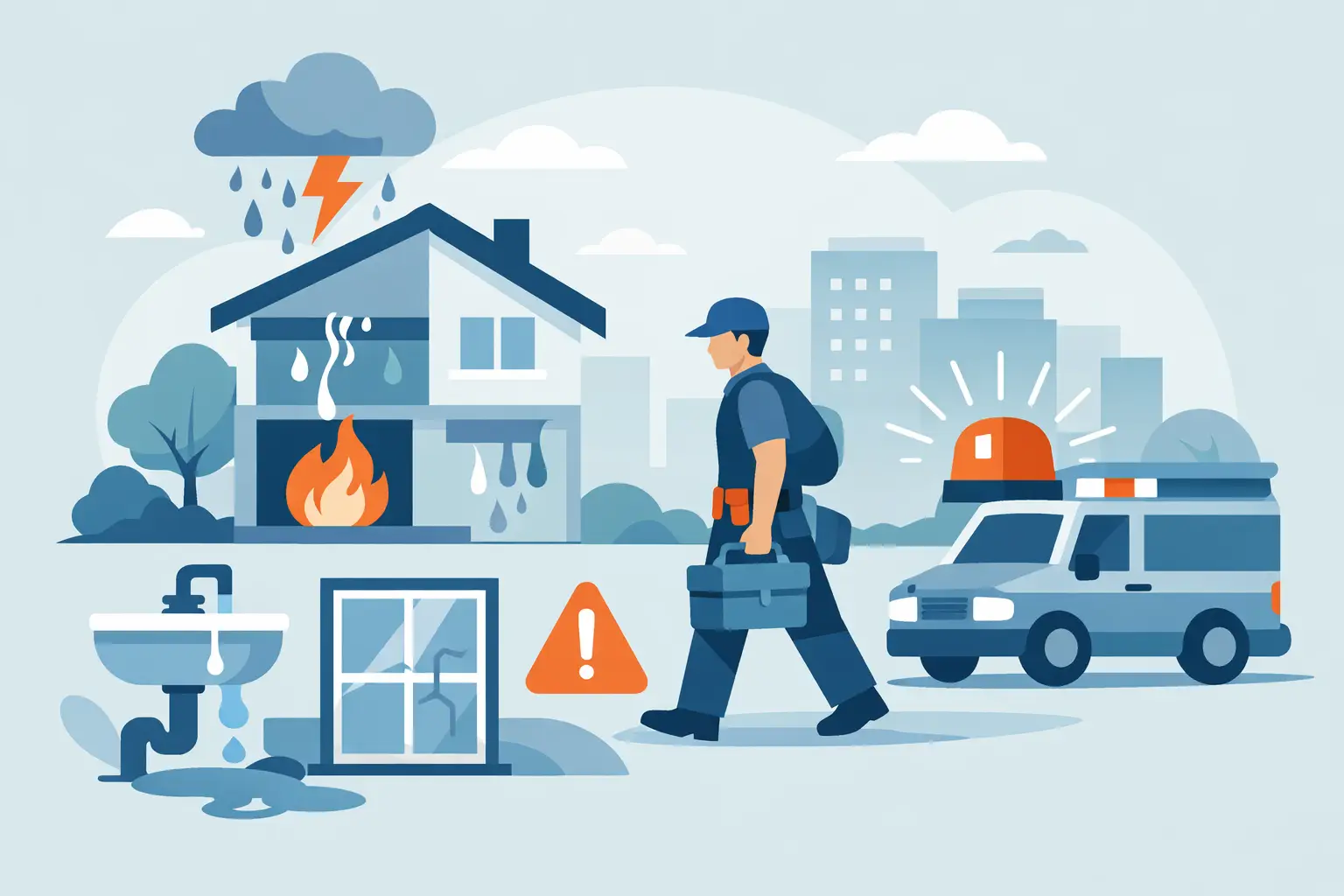
A burst pipe spreading through a ceiling void, a failed shutter at a retail unit or a complete electrical loss at a practice cannot wait for the next working day. This guide to emergency property callouts sets out how to respond calmly, protect people and property, and get the right help on site without losing valuable time.
What Counts as an Emergency Property Callout?
A property emergency is an unexpected fault or incident that presents an immediate risk to people, security, the building fabric or day-to-day operations. The key question is not whether the repair will be inconvenient. It is whether waiting is likely to make the problem unsafe, more expensive or more disruptive.
Common examples include active water leaks, blocked drains causing internal flooding, loss of electrical power, burning smells from wiring, smashed glazing, failed locks, roof damage after severe weather and heating failure in occupied premises during cold conditions. For commercial sites, an emergency can also mean an issue that prevents safe trading, stops staff from working or affects a regulated environment.
Not every maintenance issue requires an urgent attendance. A dripping tap, a stiff internal door or a minor cosmetic defect will usually be suitable for planned repair. However, a small leak near electrical fittings, a door that will not secure, or a loose roof tile following high winds can quickly become a serious problem. When in doubt, assess the risk rather than the size of the visible fault.
First Actions Before Help Arrives
The first ten minutes can limit damage and make the property safer for occupants and attending engineers. Do not attempt repairs that put you at risk, particularly around electricity, gas, heights or contaminated water. Focus on making the area safe and preserving clear information for the contractor.
Where it is safe to do so, take these immediate steps:
- Keep residents, visitors, staff and customers away from the affected area.
- Isolate the relevant supply, such as the water stopcock or electrical circuit, only if you know it is safe to do so.
- Move stock, equipment, records and valuables away from water or falling debris.
- Use buckets or temporary containment to reduce water spread, without entering unsafe spaces.
- Take clear photographs and note when the issue started, what has been affected and any actions already taken.
If there is a suspected gas leak, fire risk, serious electrical danger, structural collapse or immediate threat to life, contact the emergency services first. Property maintenance support follows once the immediate danger has been addressed.
Avoid Causing Further Damage
Well-intended temporary fixes can make a repair harder. Do not remove electrical covers, climb onto a damaged roof, force a jammed lock or repeatedly reset a tripping circuit. A circuit breaker that trips again is giving a warning that needs investigation.
For a water leak, turning off the mains supply is often the most effective first step. For broken glass, secure the area from both sides if possible and prevent access until a glazing professional can make it safe. For a failed external door or shutter, do not leave the premises unattended if security has been compromised.
Information That Speeds Up the Response
An emergency contractor can prepare more effectively when they receive accurate details at the first call. This does not mean diagnosing the fault yourself. A clear description of what you can see, hear and smell is far more useful than guessing at the cause.
Confirm the property address, the best access point, a contact number for the person on site and whether there are any parking, gate, keyholder or security procedures. Explain the nature of the problem, when it began and whether it is getting worse. Mention any immediate hazards, including standing water, vulnerable occupants, live equipment or restricted areas.
For managed blocks and commercial properties, it also helps to identify the affected location precisely. “Leak in the building” can mean several floors of investigation. “Water coming through the ceiling above reception, directly beside the consumer unit” gives the attending engineer a much clearer starting point.
Photographs and short videos can assist with triage, particularly for roof damage, glazing, leaks and access problems. They should support the call, not delay it. If water is spreading or a property is insecure, make the call first.
Choosing the Right Emergency Trade
A reliable emergency response is about sending the correct skilled professional, not simply sending the nearest available person. Plumbing, electrical, roofing, locksmith and glazing faults each carry different risks and require different equipment.
A plumber is usually needed for burst pipes, failed valves, leaking cylinders, overflowing toilets and drainage issues. An electrician should attend power loss, burning smells, exposed wiring, repeated tripping or water near electrical installations. A locksmith is appropriate where a property cannot be secured, keys have failed or access is needed following a lock malfunction.
Roofing and glazing emergencies often need a make-safe visit first. The priority may be stopping water ingress, covering an opening or securing damaged materials before a permanent repair can be completed in safe weather or with specialist parts. That is not a lesser service. It is the correct approach when conditions prevent a full repair on the first visit.
For landlords, facilities managers and multi-site operators, a provider with coverage across several trades reduces the time spent finding and briefing separate contractors. MSM Site Solutions provides 24/7 property support across Slough and surrounding areas, helping customers coordinate urgent repairs through one dependable point of contact.
Managing Emergency Callouts in Commercial Premises
A commercial emergency has wider consequences than the repair itself. You may need to protect employees, customers, confidential records, stock, machinery and trading continuity at the same time. Clear on-site procedures make a significant difference.
Facilities managers should ensure keyholders, isolation points, alarm instructions and contractor access details are current. If the building has a plant room, risers or restricted clinical areas, the attending engineer needs to know the site rules before arrival. This is particularly relevant for dental practices and healthcare-adjacent premises, where infection control, patient safety and equipment downtime must be considered alongside the building fault.
The right response may involve a temporary relocation of staff, isolating one affected area or arranging a controlled out-of-hours repair. It depends on the severity of the fault and the operational impact. A minor leak in an unused store room is different from water entering a treatment room, server area or electrical cupboard.
Keep an incident record after the callout. Note the time reported, actions taken, contractor attendance, findings, temporary measures and any recommended follow-on work. This supports insurance discussions, landlord reporting, compliance records and future maintenance planning.
Costs, Authorisation and Temporary Repairs
Emergency work can cost more than scheduled maintenance because it involves urgent attendance, out-of-hours availability and immediate sourcing of materials. The cheapest option is not always the best value if a delayed or poorly managed repair leads to greater water damage, lost trading or a security breach.
Before work begins, ask what can be done immediately to make the property safe and what may need a return visit. A professional contractor should explain the likely scope, any limitations and whether parts or further investigation are required. In some cases, particularly with concealed leaks, damaged roofs or electrical faults, the full extent cannot be confirmed until the area is safely accessed.
For landlords and businesses, set sensible approval limits in advance. A named contact should be able to authorise emergency make-safe work without waiting for multiple approvals while damage continues. Permanent repairs can then be reviewed with a fuller quote where appropriate.
Reducing Future Emergency Callouts
Most emergencies are unpredictable, but many are made more likely by missed maintenance. Regular checks on plumbing connections, roof coverings, gutters, electrical systems, locks, drainage and heating can identify wear before it becomes an out-of-hours failure.
Planned maintenance is especially valuable for older properties, high-occupancy buildings and premises with critical operations. A blocked gutter may appear minor until prolonged rain sends water through a ceiling. A worn door closer may seem harmless until an external entrance no longer closes securely. Small defects deserve attention before they become urgent.
Maintain a simple property file with utility shut-off locations, appliance information, maintenance history, warranties, emergency contacts and access arrangements. For a portfolio or commercial estate, review this information regularly rather than relying on one person’s memory.
When an urgent problem occurs, a calm response and the right professional support protect more than the building. They protect occupants, operations and your ability to get back to normal quickly. Keep your emergency information accessible, address warning signs early and make sure the people responsible for your property know exactly who to call when a fault cannot wait.
Leave a Reply