

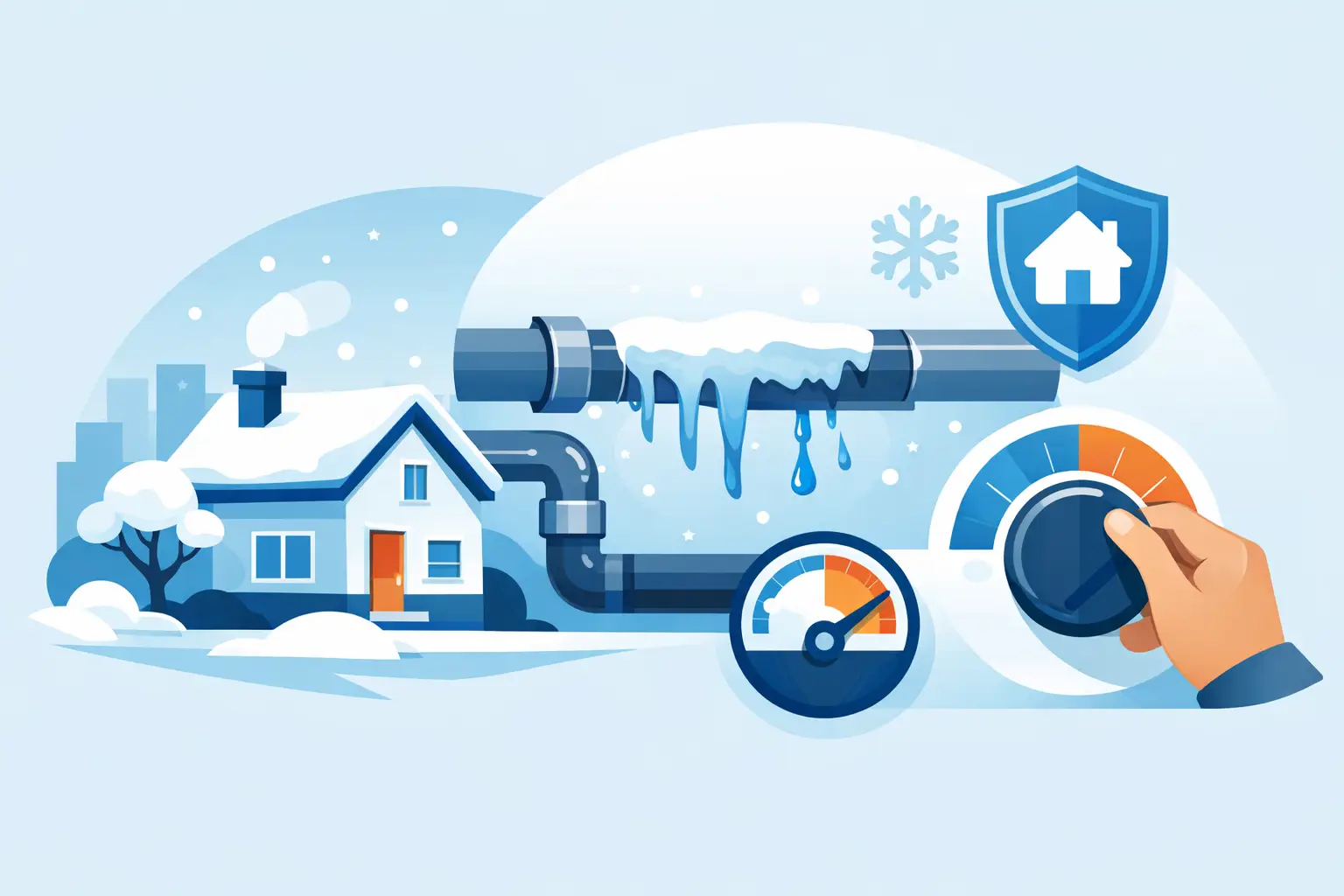
A burst pipe rarely starts as a dramatic emergency. It often begins with an unheated void, a neglected outside tap or a vacant unit during a cold spell. Taking a few practical steps to prevent frozen pipes protects your property from disruption, water damage and an avoidable call-out when temperatures fall.
For landlords, property managers and facilities teams, the risk is not limited to older buildings. Modern premises can also have vulnerable pipework in roof spaces, external plant areas, cupboards on outside walls and rarely used rooms. The key is to identify where cold air can reach pipes, then make sure heat and water systems are managed properly before winter arrives.
Why pipes freeze and why it becomes costly
Water expands as it freezes. If it freezes inside a pipe, the ice can restrict flow and create pressure between the blockage and a closed tap or valve. That pressure can split copper, plastic or flexible pipework, sometimes without an immediate visible leak. When the pipe thaws, water can escape quickly into ceilings, walls, stock rooms, communal areas or clinical spaces.
The repair itself may be straightforward. The wider consequences are often not: damaged finishes, interrupted trading, unavailable accommodation, mould risk and insurance claims can all follow. In commercial premises, a leak can also affect electrical equipment, records, equipment rooms and customer-facing areas.
Pipes are most vulnerable when temperatures remain low for several hours, especially overnight. Wind exposure matters too. A pipe in a draughty external cupboard may freeze sooner than one in a loft that is cold but properly insulated and sealed.
Start with a cold-weather pipework check
A planned inspection before winter is the most reliable way to prevent frozen pipes. Walk the property with a focus on areas that are not routinely heated or occupied. In larger sites, include outbuildings, bin stores, service risers, roof plant spaces and vacant units in the check.
Look for pipework in lofts, garages, basements, underfloor voids and cupboards on external walls. External taps, irrigation feeds, boiler condensate pipes and pipes serving unused washrooms also deserve attention. Check for missing, damaged or wet insulation, as wet lagging loses much of its insulating value.
Pay attention to signs of existing weakness. Drips around joints, corrosion, loose clips, pipework rubbing against sharp edges and slow-running taps should be addressed before a freeze exposes the problem. A small maintenance repair is far easier to organise than a burst pipe response at 2am.
Know where your stopcock and isolation valves are
Every responsible person on site should know how to isolate the water supply. In a house or flat, this is usually the internal stopcock, commonly located under a kitchen sink, near the boiler or where the mains supply enters the building. Commercial properties may have multiple isolation valves serving different zones, floors or facilities.
Test valves as part of planned maintenance where appropriate. A seized stopcock provides little protection during an emergency. Clearly label valves in plant rooms and service cupboards, and ensure relevant staff, tenants or site contacts know who has access. For managed properties, keep this information in the site file alongside emergency contact details.
Insulate exposed pipes properly
Pipe insulation is one of the simplest and most effective controls. Foam lagging helps slow heat loss from exposed water pipes and can be fitted to straight runs in lofts, garages and cupboards. It should fit closely, with joints sealed where practical, rather than leaving gaps at bends, tees and valves.
Insulation is not a substitute for heat where pipework is in a very cold space. It buys time, but prolonged freezing conditions can still overcome it. This is particularly relevant for empty properties, outbuildings and remote service areas. In those settings, consider whether pipework should be rerouted, protected with trace heating designed and installed for the application, or isolated and drained during winter.
Do not forget the water tank, where present. Tanks in roof spaces need suitable insulation around the sides and top, while keeping the area below free so warmth from the building can rise. Pipes around tanks should be insulated, but loft ventilation must not be blocked. The right approach balances frost protection with preventing condensation and maintaining the building fabric.
Keep a safe background temperature
Turning heating completely off in winter is a common cause of frozen pipes. For occupied homes, maintain a low, consistent background temperature, including overnight and when occupants are away. If the property has separate heating zones, make sure rooms containing plumbing are not left unheated simply because they are seldom used.
For offices, shops, dental practices and other commercial premises, agree a cold-weather heating strategy that reflects operating hours. A building that is warm during the day but unheated all weekend may still be at risk. Check that time controls, thermostats and frost-protection settings are working as intended before the first severe weather arrives.
Vacant buildings need additional care. If a property cannot be kept heated, isolating and draining the water system may be the safer option. This decision depends on the building layout, the systems in place and the length of vacancy. It should be carried out correctly, as trapped water in appliances, low points or external pipework can still freeze.
Protect outdoor taps and external pipework
Outdoor taps are exposed to the cold and are frequently overlooked. Before winter, turn off the internal isolation valve where one is fitted, open the external tap to drain residual water and leave it open if the system design allows. Fit an appropriate insulated tap cover for extra protection.
Check external pipework for gaps where it enters the building. Seal obvious draught paths using suitable materials, without trapping moisture or preventing required ventilation. Boiler condensate pipes are another weak point. These small pipes can freeze and cause boiler lockout, so they should be correctly sized, routed and insulated in line with the boiler manufacturer’s requirements.
If your site uses irrigation, external washdown points or seasonal water supplies, make their winter shutdown part of the maintenance calendar. Leaving these systems pressurised through freezing weather creates unnecessary risk.
Manage empty homes and unattended premises
An empty property needs a named person responsible for winter checks. This could be a landlord, managing agent, caretaker or facilities provider, but it should never be unclear. Arrange regular inspections during cold weather, particularly after a power cut, boiler fault or sudden temperature drop.
Before leaving a property unoccupied, check that windows and doors close securely, heating is operational, and access is available if an emergency develops. If tenants are responsible for keeping heating on, provide clear guidance before winter and ask them to report concerns promptly. A cold radiator, boiler warning code or loss of water pressure can be an early warning that should not wait.
For commercial sites, review alarm and monitoring arrangements. A temperature alert or leak detection system can be worthwhile in high-risk areas such as server rooms, plant spaces, stock areas and specialist treatment rooms. The level of protection should reflect the cost of downtime, not just the cost of pipe repairs.
What to do if a pipe starts to freeze
Warning signs include reduced water flow, no water from a tap, frost on visible pipework, unusual noises and a boiler that stops working because its condensate pipe has frozen. Act early. Leave the affected tap open, protect the area from further cold and apply gentle warmth to accessible pipework using a warm cloth, hot water bottle or hairdryer on a low setting.
Never use a naked flame, blowtorch or high-heat device to thaw a pipe. It can damage pipework, create a fire risk and cause a sudden failure. Do not attempt to thaw concealed pipes inside walls, ceilings or floors yourself.
If you find a leak, turn off the water supply immediately, switch off electricity only if it is safe to do so and move people and valuables away from the area. Then contact a qualified emergency plumber. Fast isolation limits damage, but professional repair is needed to make sure the pipework, joints and surrounding systems are safe.
Make winter maintenance part of the plan
The best protection is routine rather than reactive. Add pipe insulation checks, valve testing, boiler servicing, external tap shutdowns and vacant-property inspections to your planned maintenance schedule. Record what has been checked and any work completed, especially across multi-site portfolios or premises with several occupiers.
MSM Site Solutions provides dependable property maintenance and 24/7 emergency plumbing support across Slough and surrounding areas, helping residential and commercial customers deal with urgent faults as well as planned winter preparation.
Cold weather cannot be controlled, but the condition of your pipework can. A timely inspection and a clear emergency plan give your property the best chance of staying dry, operational and ready for whatever winter brings.
Leave a Reply